△ TruthInStone

Claims › Pyramids around the world › The Great Pyramid of Cholula is the largest pyramid in the world

The Great Pyramid of Cholula is the largest pyramid in the world

Status: Mainstream Verdict: Measured: largest base and volume of any pyramid, about 1.7 times the Great Pyramid's volume; the 4.45 million m³ figure is a geometric estimate
30-SECOND TAKEAWAY

In Plain English — The 30-Second Takeaway

What It Is:

The Great Pyramid of Cholula in Mexico has the largest base and total volume of any pyramid on Earth.

What Everyone Agrees On (Measured Facts):

Built from 200 BCE to 900 CE, its base covers 450 by 450 meters. That is four times the footprint of Giza's Great Pyramid.

🏛️ Mainstream Archaeology View:

Eight km of tunnels inside the mudbrick hill show how local builders expanded it in four stages over a thousand years.

🧭 Leading Edge View:

The site proves ancient Mexican builders moved more total material in one pyramid than any Old World kingdom.

Overview & Context

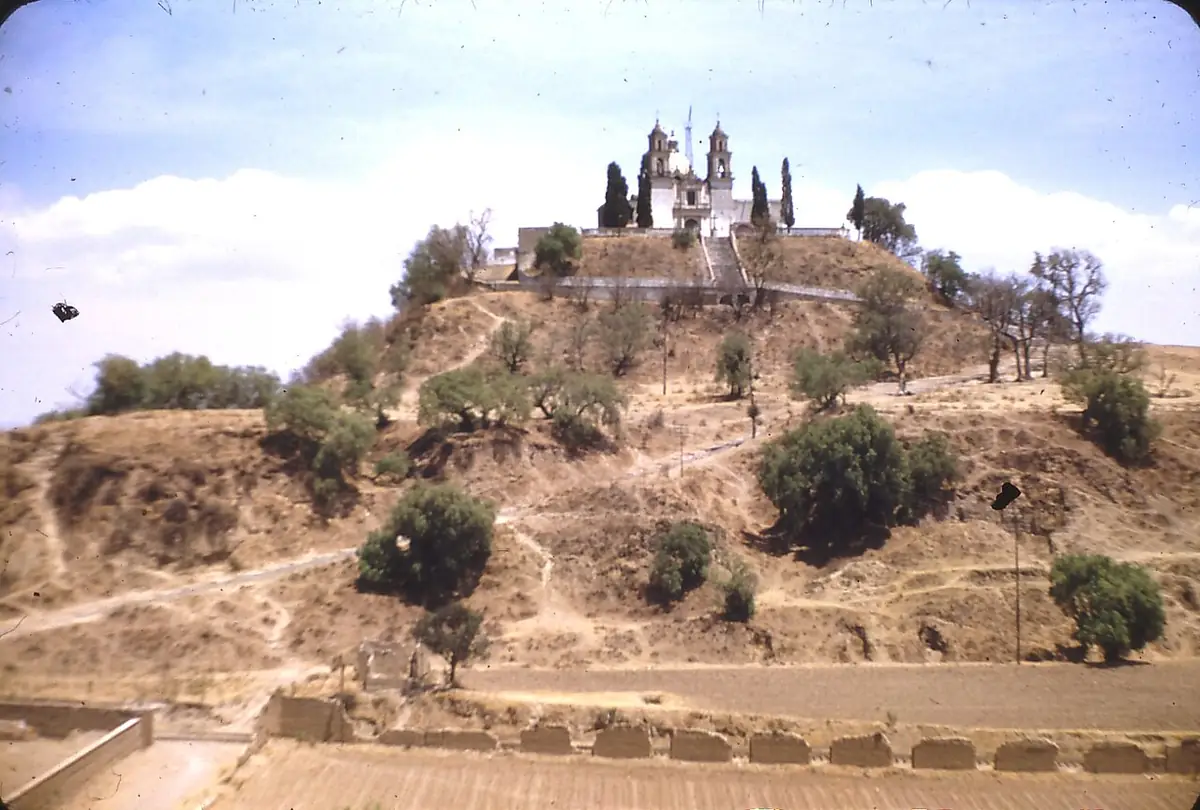
Cholula was built in at least four main stages from about the 2nd century BCE to about the 9th century CE, each enlarging the last. In the late 16th century the Spanish built the church of Nuestra Señora de los Remedios on top. Between 1931 and 1971, Mexican archaeologists explored the interior through about 8 km of tunnels.

▸ Read Technical Background, Full Claim Wording & Academic Literature History

Formal claim tested: The Great Pyramid of Cholula in Puebla, Mexico, now looking like a hill topped by a colonial church, is the largest pyramid ever built, bigger than the Great Pyramid of Giza.

Why this label applies: By base area and volume this holds. By height it does not: Cholula is less than half as tall as Giza. The volume figure usually quoted, 4.45 million m³, is exactly the volume of an ideal pyramid 450 m square and 66 m high. It is a geometric estimate, not a survey of the eroded mound.

The grass-covered mound of the Great Pyramid of Cholula with a colonial church on its summit
The Great Pyramid of Cholula today: a grassed mound with a church on top. Image: Janice Waltzer, CC BY 2.0, via Wikimedia Commons. Resized.
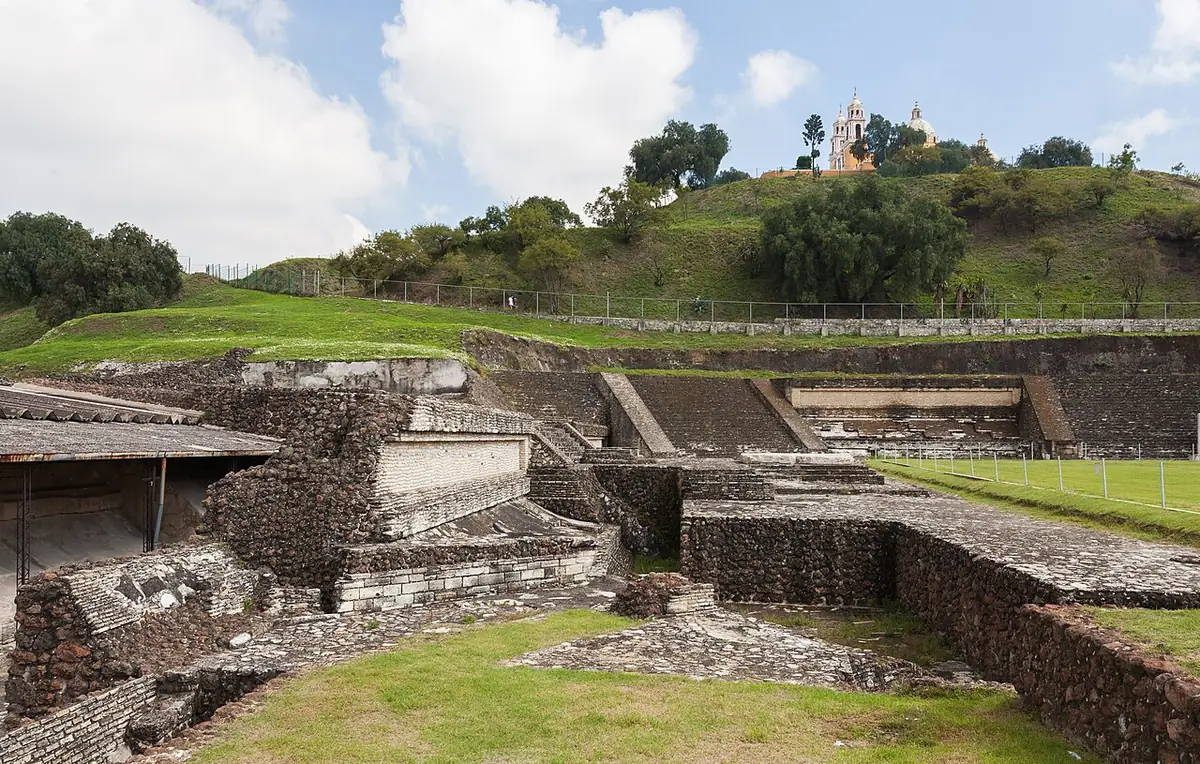
Excavated stepped stone platforms at Cholula
Excavated platforms on the pyramid's flank. Image: Diego Delso, CC BY-SA 3.0, via Wikimedia Commons. Resized.

✓ What Has Been Physically Measured

Dates, physical measurements, and excavated findings kept separate from interpretation.

🧭 Evidence & Arguments For

  • Key finding: The base area (about 0.2 km² for a 450 m square, about 3.8 times Giza's 0.053 km²) is the largest of any known pyramid, on any reasonable check. [1][4]

🏛️ Evidence & Arguments Against, or Limits

  • Key finding: Cholula is a stepped platform with a flat top and has slumped over time, so neither a pointed-pyramid nor a flat-topped model is exact. A topographic survey of the mound would give a better volume. The ranking is safe, but the exact number is not a check. [3][1]
  • Key finding: By height, Giza's Great Pyramid (about 146.6 m originally) is more than twice as tall. [4]

🔬 Open Questions & What Would Change the Verdict

A published lidar or photogrammetric survey of the whole mound would give a measured volume in place of the geometric estimate.

Ancient Sites Involved

Great Pyramid of Cholula (Tlachihualtépetl)

Related Tested Claims

📚 Further Reading: Both Sides of the Argument

Top books from both sides of the debate on this topic. Browse all 34 books on Books & Further Reading or visit our Search for the Truth Bookshop.org storefront.

Mainstream Baseline 2005 ★ 4.6/5

1491: New Revelations of the Americas Before Columbus (2nd ed.)

Charles C. Mann

Shows how new digs and laser maps proved the ancient Americas held big cities, roads, and farms long before Columbus.

▸ Why this book matters to both sides

Surveys the archaeological, botanical, and demographic discoveries showing that the pre-Columbian Americas—from Caral-Supe and the Amazon basin to Cahokia—were older, more populous, and more engineered than once taught.

Role in the debate: Documents how mainstream field evidence overturned the 20th-century 'pristine wilderness' model in the Amazon and pushed giant buildings in Peru back to the third millennium BCE. (ISBN 9781400032051)

Mainstream Baseline 2022 ★ 4.7/5

The Maya (10th ed.)

Michael D. Coe & Stephen Houston

The classic guide to the Maya world, updated with new jungle laser maps, the 1000 BCE Aguada Fénix platform, and calendar science.

▸ Why this book matters to both sides

The tenth edition of the standard academic overview of Maya culture, updated with airborne LiDAR surveys across the Petén and Campeche, the 1000 BCE Aguada Fénix plateau, and Long Count astronomy.

Role in the debate: Pairs the latest LiDAR town densities and epigraphic readings with Mesoamerican calendrical and sky debates. (ISBN 9780500295144)

Leading Edge 1995 ★ 4.7/5

Fingerprints of the Gods: The Evidence of Earth's Lost Civilization

Graham Hancock

Graham Hancock's bestseller arguing that Giza, Pumapunku, and ancient maps preserve traces of a lost Ice Age culture.

▸ Why this book matters to both sides

Hancock's worldwide bestseller examining Tiwanaku, Pumapunku, Teotihuacan, Giza, the Piri Reis map, and Hapgood's crustal-shift model. It argues for an Ice Age culture lost in a global cataclysm.

Role in the debate: The book that brought the lost-Ice-Age-culture idea to millions of readers and framed the modern debate over Giza, Pumapunku, and ancient sky sightlines. (ISBN 9780517887295)

Leading Edge 2015 ★ 4.7/5

Magicians of the Gods: The Forgotten Wisdom of Earth's Lost Civilization

Graham Hancock

Links Göbekli Tepe, Baalbek, and the Younger Dryas comet debate to argue a cosmic impact erased an Ice Age world.

▸ Why this book matters to both sides

Integrates Göbekli Tepe, Baalbek, Gunung Padang. The Younger Dryas comet-impact idea. It argues Taurid meteor-stream impacts between 12,800 and 11,600 years ago erased an advanced culture.

Role in the debate: Sets out the strongest popular overview linking Göbekli Tepe's enclosures and Pillar 43 to the Younger Dryas impact debate. (ISBN 9781250118400)

FTC affiliate disclosure: Book links go to Bookshop.org (ID 130218, Search for the Truth). Each sale helps local bookstores and pays us a 10% fee at no extra cost to you. All partner links use rel="sponsored nofollow noopener". Fees never change our verdicts. Affiliate disclosure.

Visiting & base stays: Great Pyramid of Cholula (Tlachihualtépetl) & Puebla, Mexico

FTC affiliate disclosure: Tour links go to GetYourGuide and Viator. Hotel links use Stay22 (aid=solarevidence) for Booking.com and Expedia. If you book a trip, we may earn a small fee at no extra cost to you. All partner links use rel="sponsored nofollow noopener". Check travel alerts before you go. Partner fees never change our ratings. All 64 site field visits · Affiliate disclosure.

Primary Academic Sources

▸ View All Cited Primary Sources & DOIs (4 papers)
  1. INAH (Merlo Juárez, E.), Gran Pirámide, Cholula: official site article (base size, tunnel exploration 1931–1971). https://lugares.inah.gob.mx/en/node/5519 background
  2. INAH, Zona Arqueológica de Cholula (official site page). https://lugares.inah.gob.mx/en/node/4336 background
  3. Guinness World Records: Largest pyramid (Great Pyramid of Cholula, by volume). https://www.guinnessworldrecords.com/world-records/largest-pyramid background
  4. Lehner, M. (1997). The Complete Pyramids. Thames & Hudson. https://openlibrary.org/search?q=the+complete+pyramids+lehner critique

More in this section: Pyramids around the world.

Sources checked against Crossref and publisher pages on 2026-10-23. Labels describe the claim, not the people who hold it. Methodology.