Sites › Europe › Cerne Abbas Giant (Dorset, England)
Cerne Abbas Giant (Dorset, England)
In Plain English — The 30-Second Takeaway
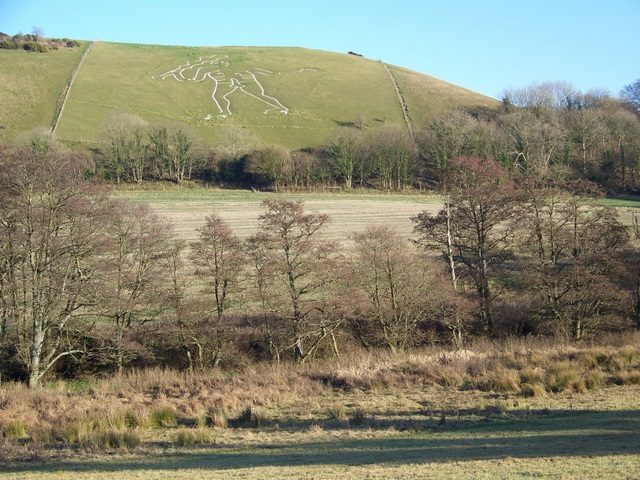
A 55 m chalk figure of a man with a club, cut into a Dorset hillside.
Soil from the deepest layer dates to 700–1100 AD.
The Giant is likely early medieval. The first written record is from 1694.
Morcom and Gittos argue he was first cut as Hercules. That is their interpretation.
Site Story & Overview
The Cerne Abbas Giant is a huge figure of a man with a club, cut into a chalk hillside in Dorset. Many experts thought it was prehistoric or from after the Middle Ages.
▸ Read Full Archaeological & Engineering Context
New soil dating points to early medieval times. Who he was meant to show is still argued.
✓ What Is Physically Measured on Site
Dated samples, laser scans, stone weights, and dug finds kept separate from opinion.
- A giant chalk figure: The National Trust says the Giant is Britain's largest chalk hill figure. It stands 55 m (180 ft) tall. The Trust has cared for it since 1920. [1]
- Dating the soil: From 2019 the Trust and partners took soil samples. A method called OSL shows when grains of sand last saw sunlight. The deepest layer, about 1 m down, gave 700–1100 AD. We have not seen these results in a peer-reviewed paper. [1]
- Not before 700 AD: Trust archaeologist Martin Papworth says the deepest samples show the Giant could not have been made before 700 AD. He says this rules out a prehistoric or Roman origin. [1]
- Later samples: Other samples gave later dates, up to 1560. The first written record is a church warden's note of a repair in 1694. [1]
- Missing from old papers: Bettey (1981) found no mention of the Giant in the many records from the 1500s and early 1600s. He says this raises doubt that the figure could be seen then. [3]
🏛️ Mainstream Archaeological View
- Accepted timeline: The Giant is likely early medieval. The National Trust says sediment from the deepest layer dates to 700–1100 AD. It thinks the figure was first made in late Saxon times.
- Stone & hardness: Not reported in the sources on this page. Mohs hardness: not reported in our sources.
- Quarry distance & alignment: Stone source not reported in the sources on this page. Orientation: Not reported in the sources on this page.
🧭 Leading Edge Proposal & Open Questions
- Interpretation: Morcom and Gittos (2024): Hercules, then a saint: The authors propose why the Giant was first cut, as an image of Hercules. They argue an early medieval text refers to him. By the 11th century, they say, people saw him as Saint Eadwold. [2]
- Interpretation: National Trust (Papworth): Made, lost, found again? Papworth's working idea is that the Giant was cut early, then grassed over and forgotten. Later, people may have spotted it in low sunlight and cut it again. That could explain why old records skip it. [1]
- Open question: Who is he? The Trust lists old guesses: Hercules, a fertility figure, or even Oliver Cromwell. Morcom and Gittos also trace how the idea of a pagan god called Helith came about. The sources here do not settle it. [1][2]
Primary Academic Sources
▸ View All Cited Primary Sources & DOIs (3 papers)
- National Trust. History of the Cerne Giant, accessed 3 November 2026 (reports the 2021 sediment-dating results; we have not seen them in a journal paper) https://www.nationaltrust.org.uk/visit/dorset/cerne-giant/history-of-… background
- Morcom, T. & Gittos, H. (2024). The Cerne Giant in Its Early Medieval Context. Speculum 99(1): 1–38. doi:10.1086/727992 proponent
- Bettey, J. H. (1981). The Cerne Abbas Giant: the documentary evidence. Antiquity 55(214): 118–119. doi:10.1017/s0003598x0004391x data
Dates and stone checks are summed up in plain English from the papers above. Measured facts stay separate from opinion. Methodology.