Sites › Asia › Dead Sea Scrolls (Qumran caves)
Dead Sea Scrolls (Qumran caves)
In Plain English — The 30-Second Takeaway
A manuscript find of about 1,200 ancient texts from caves near Qumran.
14 scrolls were radiocarbon dated in 1992. A 2025 model was trained on 24 dated samples.
Radiocarbon dates for 14 scrolls mostly matched handwriting dates (Bonani 1992). Dates for each scroll are still being refined.
A 2025 team says many scrolls may be older than the usual handwriting dates. It is one new study.
Site Story & Overview
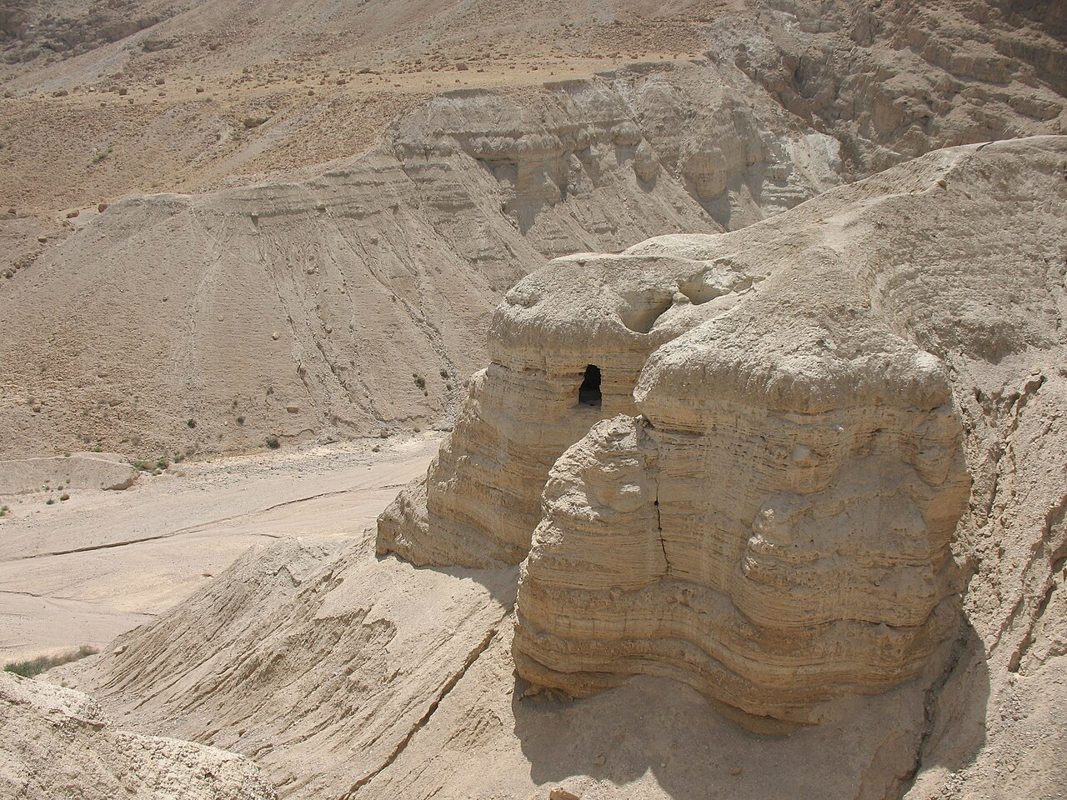
The Dead Sea Scrolls are ancient Jewish manuscripts found in caves near Qumran, by the Dead Sea. This page is about a manuscript find at Qumran, not a building.
▸ Read Full Archaeological & Engineering Context
Scholars agree the scrolls are ancient. The open question is how old each one is. Radiocarbon and a new computer model now add to the old handwriting clues.
✓ What Is Physically Measured on Site
Dated samples, laser scans, stone weights, and dug finds kept separate from opinion.
- The first find: The 1992 paper says a Bedouin shepherd found the first scrolls by chance in 1947, in a cave near Khirbet Qumran. [1]
- About 1,200 manuscripts: The same paper says the name Dead Sea Scrolls covers some 1,200 manuscripts from caves above the Dead Sea. Some are tiny scraps. Others are whole books of the Hebrew Bible. [1]
- Few dates written down: Only a few scrolls say when they were written. Most were dated from other clues, such as the style of the handwriting. [1]
- Radiocarbon tests: The 1992 team dated 14 scrolls by radiocarbon. The team says the ages "agree well, except in one case, with the paleographic estimates". [1]
- A computer model: A 2025 team built a model called Enoch. It learned the shapes of letters from 24 scroll samples with radiocarbon dates. On average its guesses were off by about 28 to 31 years. [2]
- Tested on new scrolls: The team then used Enoch on 135 scrolls with no date. Handwriting experts who checked later agreed with 79% of its dates. [2]
🏛️ Mainstream Archaeological View
- Accepted timeline: Our sources give no single date range for all the scrolls. A 1992 radiocarbon study found its dates mostly matched the dates from handwriting style. A 2025 study says many scrolls may be older than those style dates.
- Stone & hardness: Not reported in the sources on this page. Mohs hardness: not reported in our sources.
- Quarry distance & alignment: Stone source not reported in the sources on this page. Orientation: Not reported in the sources on this page.
🧭 Leading Edge Proposal & Open Questions
- Leading Edge: Popović and colleagues (2025): Older than thought? The 2025 team says its radiocarbon dates and Enoch's style dates are often older than the usual handwriting estimates. They say this points to a new timeline for the scrolls. This is one new study. [2]
- Mainstream: Bonani and colleagues (1992): Two methods mostly agree: The 1992 radiocarbon dates mostly matched the handwriting dates, with one exception. [1]
- Open question: Why the dates matter: The 2025 team says dating the scrolls helps show how ideas changed over time. It links this to current debates on Jewish and Christian origins. How far the new timeline will hold is still open. [2]
Visiting: Qumran (West Bank)
Primary Academic Sources
▸ View All Cited Primary Sources & DOIs (2 papers)
- Bonani, G., Ivy, S., Wölfli, W., Broshi, M., Carmi, I. & Strugnell, J. (1992). Radiocarbon Dating of Fourteen Dead Sea Scrolls. Radiocarbon 34(3): 843–849 (first find, 1947: p. 843). doi:10.1017/s0033822200064158 data
- Popović, M., Dhali, M. A., Schomaker, L., van der Plicht, J., Lund Rasmussen, K., La Nasa, J., Degano, I., Perla Colombini, M. & Tigchelaar, E. (2025). Dating ancient manuscripts using radiocarbon and AI-based writing style analysis. PLOS One 20(6): e0323185. doi:10.1371/journal.pone.0323185 proponent
Dates and stone checks are summed up in plain English from the papers above. Measured facts stay separate from opinion. Methodology.