Sites › Asia › Ancient Jericho and the Tower (Tell es-Sultan)
Ancient Jericho and the Tower (Tell es-Sultan)
In Plain English — The 30-Second Takeaway
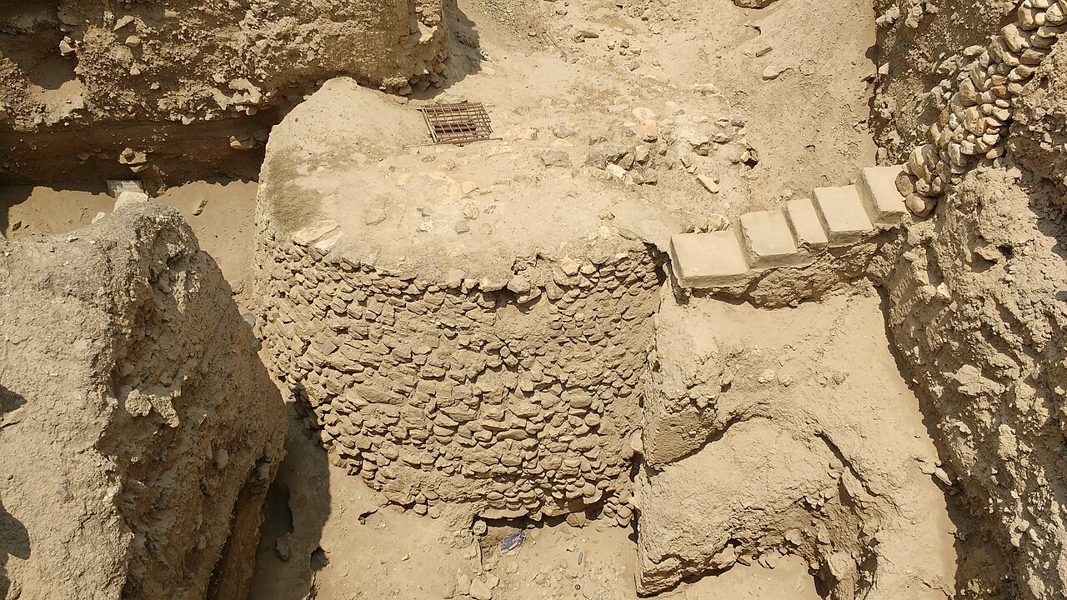
An ancient mound at Jericho with one of the oldest known stone towers.
UNESCO counts 29 phases of living here. Only two of 44 people tested grew up elsewhere.
Barkai and Liran date the tower to about 8300 BC. Its purpose is still argued.
Barkai and Liran argue the tower lines up with the midsummer sunset. That is their interpretation.
Site Story & Overview
Jericho's old mound, Tell es-Sultan, lies in the Jordan Valley. It holds one of the oldest known stone towers, built more than 10,000 years ago.
▸ Read Full Archaeological & Engineering Context
Scholars agree it is very old. They do not agree on what the tower was for.
✓ What Is Physically Measured on Site
Dated samples, laser scans, stone weights, and dug finds kept separate from opinion.
- A deep mound: UNESCO says the mound holds layers of human life going back to about 10,500 BC. It counts 29 phases of living there. A spring next to the mound has been a water source for thousands of years. [1]
- Wall, ditch and tower: UNESCO says that in the 9th to 8th millennium BC Jericho was already a large village where people stayed for good. It had a tower, plus a wall with a ditch. [1]
- Later city walls: UNESCO says that in the Middle Bronze Age a large Canaanite city stood here. It had new kinds of earth and stone defenses. [1]
- Age of the tower: Barkai and Liran (2008) date the tower to about 8300 BC. They say no older monumental building is known. [2]
- Teeth tell where people grew up: A 2023 study tested chemical traces (isotopes) in the teeth of early Jericho people. Of 44 people tested, only two seem to have grown up somewhere else. The team found more males than females in the sample. [3]
🏛️ Mainstream Archaeological View
- Accepted timeline: UNESCO says people lived at the mound from about 10,500 BC. In the 9th to 8th millennium BC it already had a tower, a wall and a ditch. Barkai and Liran date the tower to about 8300 BC.
- Stone & hardness: Not reported in the sources on this page. Mohs hardness: not reported in our sources.
- Quarry distance & alignment: Stone source not reported in the sources on this page. Orientation: Not reported in the sources on this page.
🧭 Leading Edge Proposal & Open Questions
- Open question: What was the tower for? Barkai and Liran say the tower's purpose is still argued. They list three main ideas: part of a defense system, part of a flood barrier, or a symbol of some kind. They find problems with the first two ideas. [2]
- Leading Edge: Barkai and Liran (2008), authors' interpretation: Lined up with the sky? They argue the tower was "inherently aligned to celestial and geographical elements". Their paper's title links it to the midsummer sunset. This is the authors' interpretation. [2]
- Interpretation: Wang and colleagues (2023): A settled village: The team says its tooth results fit a mostly settled community. They found no sign of people moving in on a large scale. They say the male-heavy sample may come from the small sample size or from burial customs. [3]
Visiting: Jericho, Tell es-Sultan (West Bank)
Primary Academic Sources
▸ View All Cited Primary Sources & DOIs (3 papers)
- UNESCO World Heritage Centre. Ancient Jericho/Tell es-Sultan (list no. 1687), accessed 3 November 2026 https://whc.unesco.org/en/list/1687 background
- Barkai, R. & Liran, R. (2008). Midsummer Sunset at Neolithic Jericho. Time and Mind 1(3): 273–283. doi:10.2752/175169708x329345 proponent
- Wang, X., Zhang, B., Sun, Y., Ingman, T. & others (2023). Isotopic and proteomic evidence for communal stability at Pre-Pottery Neolithic Jericho in the Southern Levant. Scientific Reports 13: 16360. doi:10.1038/s41598-023-43549-1 data
Dates and stone checks are summed up in plain English from the papers above. Measured facts stay separate from opinion. Methodology.