Sites › Africa › Rock-cut churches of Lalibela (Ethiopia)
Rock-cut churches of Lalibela (Ethiopia)
In Plain English — The 30-Second Takeaway
Eleven churches cut out of the rock in the Ethiopian highlands.
Each church was carved from the rock. Trenches and passages link them.
Scholars credit the churches to King Lalibela's time, by tradition.
A 2010 study asks if they were one plan or built in phases. The answer is not given here.
Site Story & Overview
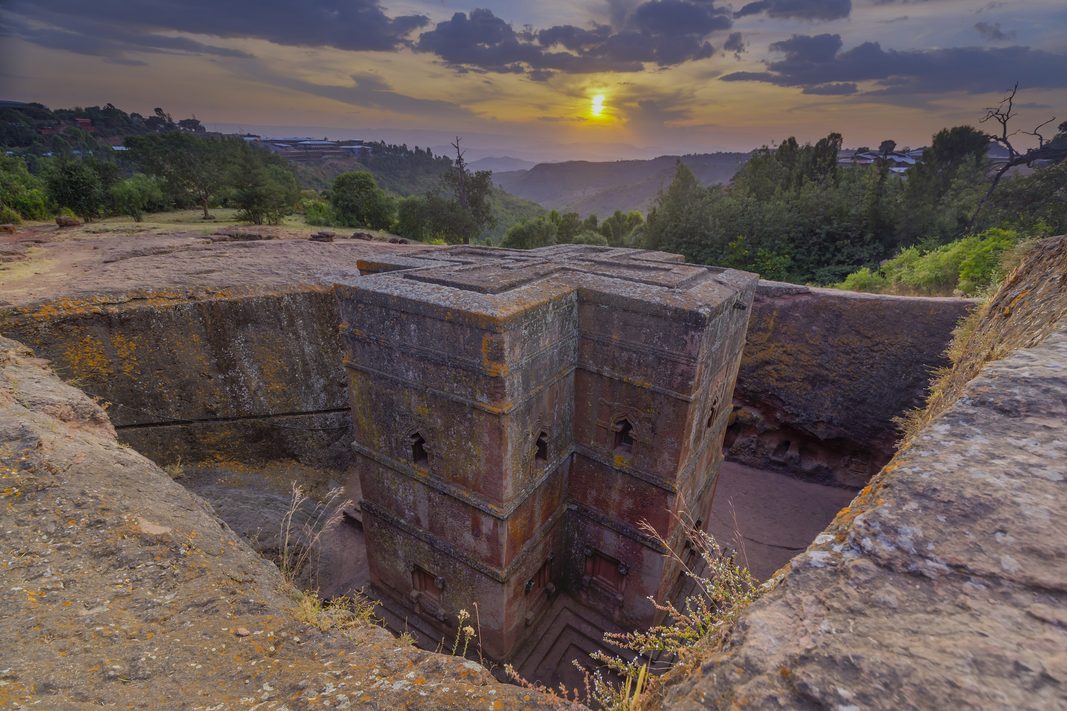
Lalibela is a town in the highlands of Ethiopia. Its churches were carved straight down into the rock, so each one is a single block of stone.
▸ Read Full Archaeological & Engineering Context
Tradition credits King Lalibela with building them as a New Jerusalem. A 2010 study looked at how the building order can be worked out from the site itself.
✓ What Is Physically Measured on Site
Dated samples, laser scans, stone weights, and dug finds kept separate from opinion.
- Eleven churches from living rock: UNESCO says the churches were not built up from blocks. They were carved down from the rock, with doors, windows, columns, floors and roofs cut out of it. [1]
- Two groups and one apart: Ten churches sit in two main groups on either side of a stream called the river Jordan. The eleventh, the Church of Saint George (Biete Ghiorgis), stands apart but is linked by trenches. [1]
- Ditches and passages: UNESCO says drainage ditches, trenches and passages for ceremonies run through the site. Some open into caves where hermits lived. [1]
- Reading the building order: A 2010 study argues that the order of building can still be read at Lalibela. The clues are in the cuts and openings, in the heaps of waste rock, and even in soil layers that are now gone. [2]
🏛️ Mainstream Archaeological View
- Accepted timeline: Eleven churches carved out of solid rock. UNESCO says their building is credited to King Lalibela in the 12th century.
- Stone & hardness: Not reported in the sources on this page. Mohs hardness: not reported in our sources.
- Quarry distance & alignment: Stone source not reported in the sources on this page. Orientation: Not reported in the sources on this page.
🧭 Leading Edge Proposal & Open Questions
- Open question: Fauvelle-Aymar and colleagues (2010): One plan or many phases? The 2010 study asks whether the churches were one grand plan or a site reworked over a long time. We have read only its abstract, so its answer is not given here. [2]
Primary Academic Sources
▸ View All Cited Primary Sources & DOIs (2 papers)
- UNESCO World Heritage Centre. Rock-Hewn Churches, Lalibela (list no. 18), accessed 2 November 2026 https://whc.unesco.org/en/list/18 background
- Fauvelle-Aymar, F.-X., Bruxelles, L., Mensan, R., Bosc-Tiessé, C., Derat, M.-L. & Fritsch, E. (2010). Rock-cut stratigraphy: sequencing the Lalibela churches. Antiquity 84(326): 1135–1150. doi:10.1017/s0003598x00067132 data
Dates and stone checks are summed up in plain English from the papers above. Measured facts stay separate from opinion. Methodology.