Sites › Europe › Su Nuraxi and the Nuraghi (Barumini, Sardinia)
Su Nuraxi and the Nuraghi (Barumini, Sardinia)
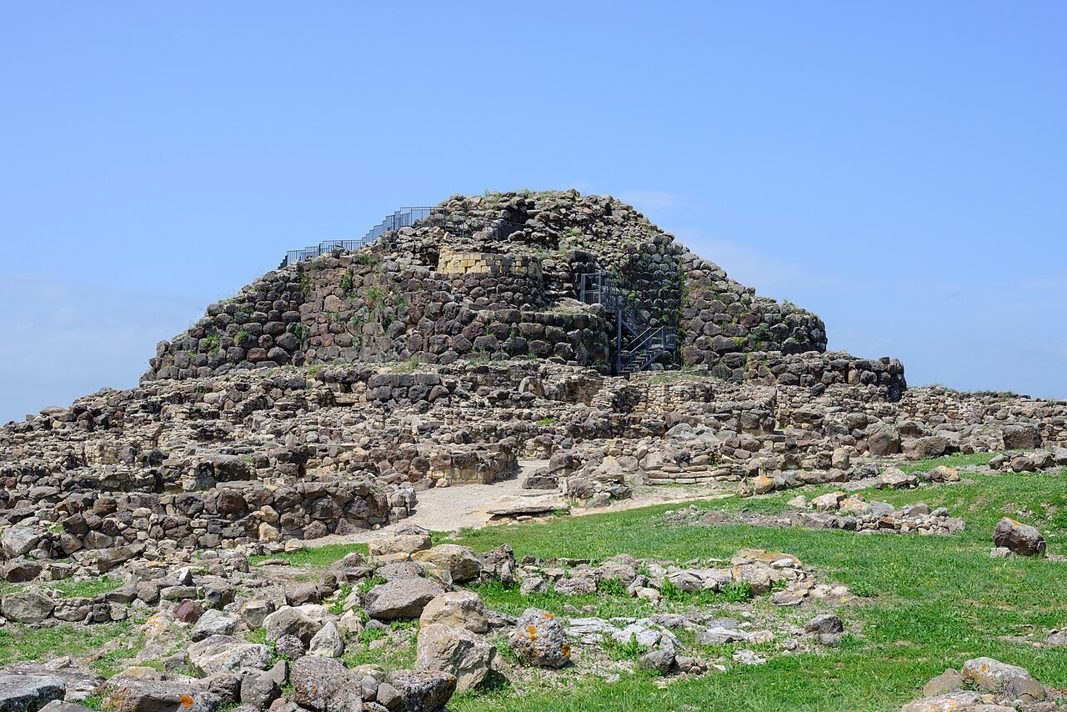
In Plain English — The 30-Second Takeaway
A Bronze Age stone tower complex, the best-known of Sardinia's nuraghi.
The main tower was once over 18.5 m tall.
UNESCO calls the nuraghi defensive towers.
A 2024 study found they were not placed for wide views. Their purpose is still open.
Site Story & Overview
Su Nuraxi is the best-known nuraghe, a type of Bronze Age stone tower found only on Sardinia. These towers are found all over the island.
▸ Read Full Archaeological & Engineering Context
Scholars agree on their rough age. What they were for is still an open question.
✓ What Is Physically Measured on Site
Dated samples, laser scans, stone weights, and dug finds kept separate from opinion.
- Only in Sardinia: UNESCO says nuraghi are stone towers found only on Sardinia. They are shaped like cones with the tops cut off. Inside are rooms with stone roofs that step inward. [1]
- A tall center tower: At Su Nuraxi, the main tower had three rooms, one above the other, linked by a spiral stair. UNESCO says it was once over 18.5 m tall. [1]
- Four more towers: UNESCO says four smaller towers and a thick wall later ringed the main tower. A village of round huts grew up around it. [1]
- A long life: UNESCO says the site was left in the 6th century BCE, with some later use. People still lived there until the 3rd century CE. [1]
- A map test: A 2024 team studied what could be seen from 102 nuraghi in southwest Sardinia, using computer maps. [2]
🏛️ Mainstream Archaeological View
- Accepted timeline: UNESCO places the nuraghi in the Middle to Late Bronze Age, about 1600–1200 BCE. People lived at Su Nuraxi until the 3rd century CE.
- Stone & hardness: Not reported in the sources on this page. Mohs hardness: not reported in our sources.
- Quarry distance & alignment: Stone source not reported in the sources on this page. Orientation: Not reported in the sources on this page.
🧭 Leading Edge Proposal & Open Questions
- UNESCO's summary: Built for defense: UNESCO calls the nuraghi defensive towers. It says single families or clans may have built the first ones. [1]
- Interpretation: Rothenberg and colleagues (2024): Not placed for watching: The team found no pattern linking where nuraghi stand to how much land they overlook. They say visual control was not a key reason for where they were built. They tested visual control, not defense, so this does not overturn UNESCO's view. [2]
- Open question: What were they for? The 2024 team says why the nuraghi stand where they do, and what they were for, is still poorly understood. [2]
Visiting: Su Nuraxi di Barumini (Sardinia, Italy)
- Su Nuraxi di Barumini guided tours GetYourGuide
- Su Nuraxi & Barumini nuraghe tours (search) Viator
FTC affiliate disclosure: Tour links go to GetYourGuide and Viator. Hotel links use Stay22 (aid=solarevidence) for Booking.com and Expedia. If you book a trip, we may earn a small fee at no extra cost to you. All partner links use rel="sponsored nofollow noopener". Check travel alerts before you go. Partner fees never change our ratings. All 87 site field visits · Affiliate disclosure.
Primary Academic Sources
▸ View All Cited Primary Sources & DOIs (2 papers)
- UNESCO World Heritage Centre. Su Nuraxi di Barumini (list no. 833), accessed 3 November 2026 https://whc.unesco.org/en/list/833 background
- Rothenberg, M., Leppard, T. P., Weitzel, E. & Murphy, E. A. (2024). Settlement Organization and Distribution in Bronze Age Sardinia: Utilizing Cumulative Viewshed Analysis and Spatial Statistics in the Sulcis Plain. Journal of Field Archaeology 49(5): 356–370. doi:10.1080/00934690.2024.2318682 data
Dates and stone checks are summed up in plain English from the papers above. Measured facts stay separate from opinion. Methodology.