Sites › Europe › Sungir (Sunghir) Burials, Vladimir, Russia
Sungir (Sunghir) Burials, Vladimir, Russia



In Plain English — The 30-Second Takeaway
Ice Age burials in Russia, with two children buried head to head and covered in ivory beads.
The graves are reported at about 34,000 years old. Grave 2 holds two boys, about 12 and 10, with about 10,400 ivory beads and ivory spears up to about 2.4 m long. DNA shows the people were not close kin.
Bone dates place the graves near 34,000 years ago. Some experts read the extra goods as a status given to the children, not earned.
A 2024 paper argues for a younger age. Why the children got so much is still debated, including a bone problem in one boy.
Site Story & Overview
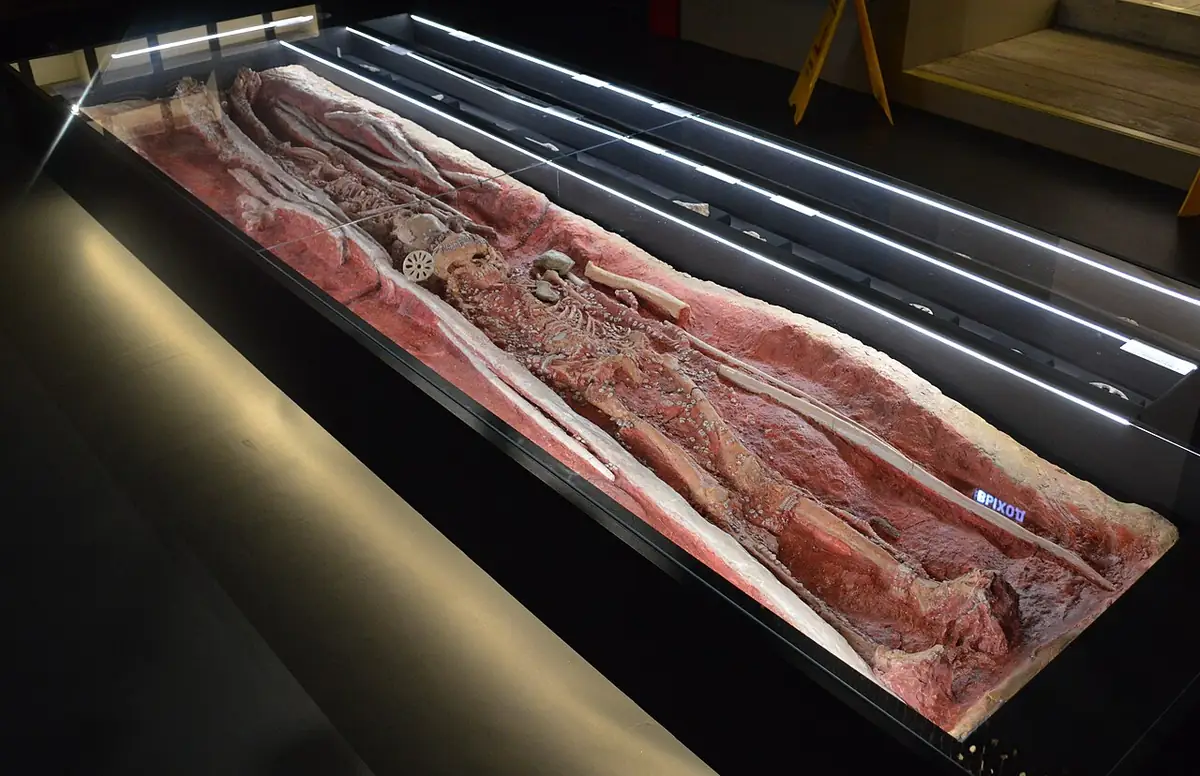
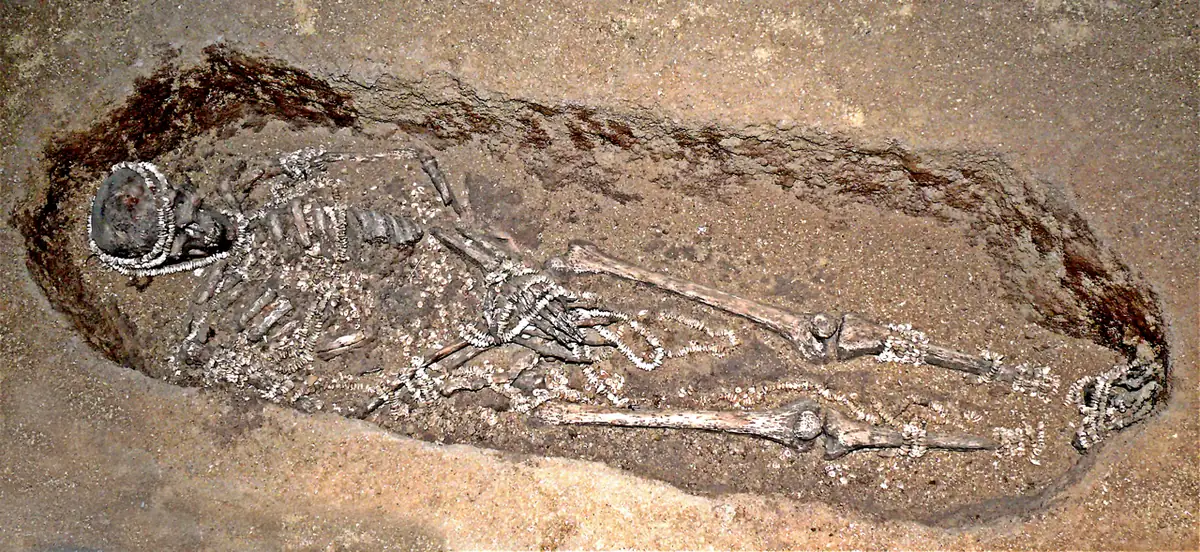
Sungir is an Upper Paleolithic camp and burial site on the edge of Vladimir, Russia. Experts call grave 2 the most elaborate Upper Paleolithic burial known. An adult man lay in one grave. Two children lay head to head in another, with about 10,400 mammoth-ivory beads, fox teeth, ivory spears and carvings.
▸ Read Full Archaeological & Engineering Context
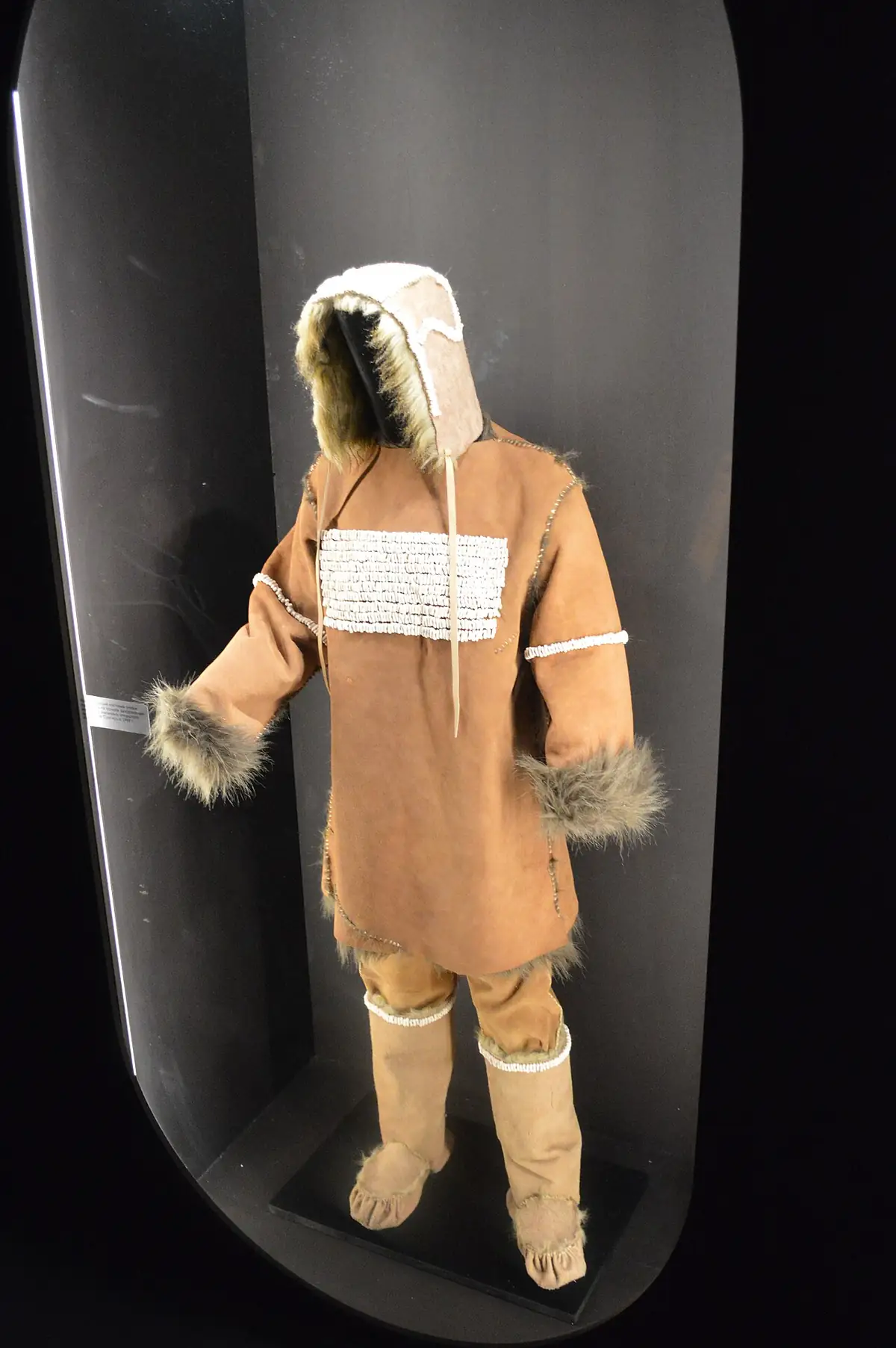
This page reviews peer-reviewed papers from 2007 to 2024. It keeps facts apart from ideas, and it flags where sources disagree, such as bead counts, spear lengths and the age of the graves. DNA from 2017 shows the people were not close kin. We name the nearest city only and show no map. The photos show replicas, models and reconstructions, not original graves or clothing.
✓ Key Facts (As Reported in the Sources)
Figures from peer-reviewed papers, each at the strength the source gives it. Where two sources give different numbers, both are shown. Ideas that go beyond the data are labeled further down.
- About 34,000 years old: The burials are dated to about 34,000 years ago. Sikora and colleagues (2017) give 33,600 to 34,600 years before present, taken from earlier radiocarbon work. Trinkaus and Buzhilova (2018) give about 30,000 radiocarbon years BP, which is about 34,000 calendar years (cal BP). Some experts argue for a younger age. See the dating card below. [2][1]
- Two children, head to head: Grave 2 holds two children, called Sunghir 2 and Sunghir 3. They lie head to head, not side by side. The 2018 paper puts them at about 12 and about 10 years old. DNA shows both were boys. [1][2]
- About 10,400 ivory beads on the two children: The 2018 paper counts about 5,000 mammoth-ivory beads with Sunghir 2 and about 5,400 with Sunghir 3. That is about 10,400 beads. The beads were probably sewn onto clothing. Adding about 3,000 beads on the adult, Sunghir 1, gives about 13,400 for Sunghir 1, 2 and 3 (graves 1 and 2). That matches the 2018 paper's total of about 13,400 ivory beads for the Sunghir burials; the paper does not list how it reached that total. The next-richest burials of that period in the paper had about 600 to 700 beads, made of shell and teeth. [1]
- Sources give different bead counts: The 2022 Radiocarbon supplement counts about 3,500 beads for the adult, about 2,730 for Sunghir 2 and about 3,500 for Sunghir 3. That adds up to about 9,730 in graves 1 and 2. The children's counts are lower than the 2018 counts of about 5,000 and about 5,400. The papers do not explain the gap. Both totals are far above any other burial in the 2018 comparison. [4][1]
- Ivory spears up to about 2.4 m long: Grave 2 held long spears made of mammoth ivory. The 2018 paper counts 16 spears from 0.27 to 2.47 m long. The 2022 supplement lists 2 spears, 2.42 m and 1.66 m long, plus 12 shorter javelins. Soldatova (2014) also lists 2 spears, 247 cm and 165 cm, and 12 javelins from 30 to 145 cm. So the longest is about 2.4 m, but the spear count and exact length differ by source. [1][4][7]
The Burials: What Was Found
What the excavators and later studies describe in the graves.
- Mainstream — Measured The site: Sungir (also spelled Sunghir) lies on the edge of the city of Vladimir, Russia. O.N. Bader dug there from 1957 to 1977. The dig covered about 4,500 m² of an area estimated at about 10,000 m². The graves were cut into windblown loess soil under the main layer of camp debris. [1]
- Mainstream — Measured Sunghir 1, grave 1: An adult man, about 35 to 45 years old, lay stretched on his back. His head and upper chest were covered in ochre, a red mineral pigment. The 2018 paper counts about 3,000 ivory beads, 25 ivory arm bands, 12 pierced fox teeth on the forehead and one pigmented stone pendant. A cut through the lower neck reached the first chest vertebra. The authors say it would have caused death quickly. [1]
- Mainstream — Measured Ochre in graves 1 and 2: The bones of Sunghir 1, 2 and 3 are stained with ochre, mostly around the head and upper chest. Sunghir 3 also had some on the pelvis and right leg. The authors think the abundant ochre was probably added when each person was buried. The amount of staining was about average for burials of that period. [1]
- Mainstream — Measured Other goods in grave 2: Sunghir 2 had a belt of more than 250 pierced fox teeth, over 40 more on the head, a small ivory animal pendant and a large ivory carving of a mammoth. Sunghir 3 had four ivory disks with cut-out holes and two pierced antler batons. Both children wore ivory arm bands. Each had a fibula bone laid across the chest, as if fastening a cape. [1]
- Mainstream — Measured An adult thigh bone in the children's grave: Sunghir 4 is the shaft of an adult thigh bone from a person of unknown sex. Its ends were removed and its hollow center was filled with ochre. It lay beside Sunghir 2. Its chemical profile differs from Sunghir 1, 2 and 3. The authors say that suggests a different place of origin or a different history after death. [1]
- Mainstream — Measured Other human remains: The site also gave an isolated skull (Sunghir 5), another adult in a poorly kept grave (Sunghir 10, grave 2bis), and other bones. The 2018 paper says the dead at Sunghir were treated in several different ways, and it ties the richest goods to the two children. [1]
- Mainstream — Measured Spears, tools and tusks: The 2018 paper calls the ivory spears a major manufacturing effort. It also notes broken ivory spear pieces in the camp layer. Soldatova (2014) lists two small ivory tools called "straightening rods" (18.6 cm and 11.4 cm) from the children's grave, found by the skeleton now known as Sunghir 3. She says tools and weapons found in the graves may have had a ritual or symbolic meaning. [1][7]
How Old Are the Burials? The Dating Story
The age has been revised more than once. Radiocarbon years (BP) and calendar years (cal BP) are different scales.
- Mainstream — Measured Early dates were scattered: Radiocarbon dates on the human bones made before the 2020s ran from about 19,160 to about 30,000 radiocarbon years BP. Glues and hardeners used when the bones were recovered in the 1960s had soaked into them. That contamination makes bone dates look too young. The 2018 paper says most Sunghir dates give minimum ages. [3][1]
- Mainstream — Measured A cleaner method gave older dates: Researchers dated one amino acid, hydroxyproline, to avoid the contamination. They got about 28,890 BP for Sunghir 1, about 30,100 BP for Sunghir 2, about 30,000 BP for Sunghir 3 and about 29,820 BP for Sunghir 4. As calendar ranges these span about 32,000 to 35,600 cal BP. These are the dates behind the "about 34,000 years" figure. [3][2]
- Mainstream — Measured Radiocarbon years are not calendar years: At this age, calendar ranges run about 4,000 to 4,500 years older than the BP number. For example, 29,780 BP calibrates to 33,340 to 35,140 cal BP in the 2022 table. Do not mix the two scales. [3]
- Mainstream — Measured 2020 to 2022 re-dating: Kuzmin and colleagues tested new bone samples and checked them for contamination. Most new dates on Sunghir 2 and 3 were rejected as too young. One treated bone from Sunghir 1 gave 29,780 BP, matching the earlier hydroxyproline date. Four animal bones below the burials gave 28,800 to 30,140 BP. The authors conclude the graves date to roughly that range. Their abstract and conclusion give slightly different ranges (28,800 to 30,140 BP, and 29,800 to 30,300 BP or 34,200 to 34,700 cal BP). [3]
- Mainstream — Measured Not every grave need be the same age: Kuzmin and colleagues say the site has a complex layer history. They write that the graves, charcoal and animal bones are not necessarily from the same time. The two children were buried together. The adult in grave 1 is not shown to be the same age. [3][2]
- Contested A younger view: Gavrilov, Kuzmin and Chechushkova (2024) re-read the field notes of the dig. They argue that the 14C dates from 26,000 to 29,000 BP best fit the graves. They accept 27,000 to 29,000 BP for the man and the two children, and prefer about 28,000 BP. This is younger than the 34,000-year figure. We read only their English abstract. [5]
- Attributed "Oldest in Europe"? The 2018 authors write that this age makes the burials the oldest securely dated modern human burials in Europe. That is their claim and it depends on the date holding up. [1]
What the DNA Shows
A 2017 study sequenced genomes from the Sunghir people.
- Mainstream — Measured Genomes from five people: The team sampled six people from the site. Five gave enough DNA for full genomes: Sunghir 1, 2, 3, 4 and 6. One mandible (Sunghir 6) turned out to be only about 900 years old, so it was left out of the Ice Age analysis. The DNA of Sunghir 5 was too poor to use. [2][1]
- Mainstream — Measured All were male: All the Ice Age individuals tested were genetically male. That includes Sunghir 3, who had earlier been thought to be a girl. Sunghir 2 and 3 had been called a boy and a girl. [2][6]
- Mainstream — Measured Not close kin: None of the people tested were related at the third degree (a first cousin or closer). This holds even though Sunghir 2, 3 and 4 share the same mitochondrial (maternal-line) DNA type and the same Y-chromosome line. Sunghir 1 has a different maternal-line type. [2]
- Mainstream — Measured A small group, no close inbreeding: The DNA points to a small breeding group. The authors' estimates run from about 200 to 500, a statistical measure and not a head count. The patterns look like those of living hunter-gatherer groups, and the authors say close inbreeding was avoided. [2]
- Attributed What the authors infer: They suggest that Ice Age social life already looked like that of living hunter-gatherers: small bands that took partners from other bands. They warn that the idea rests on the people being from the same time and group, and on one site only. They note that Sunghir 1 and 4 might have come from other groups. [2]
- Attributed An older idea the DNA did not support: An earlier book (Trinkaus and colleagues, 2014) read the shared body features and the bone problems in Sunghir 3 as possible signs of inbreeding. Sikora and colleagues report that the genomes do not show close inbreeding. [2]
Status, the Children and Debated Points
Experts disagree on these points. Each item names who holds which view.
- Attributed Status given, not earned: Trinkaus and Buzhilova say grave 2 suggests the children had a status "ascribed" to them. They mean something more than children of about a decade could have earned. Other richly buried children of that period support the point, such as the Arene Candide adolescent. This is their reading of the grave, not a measurement. [1]
- Contested Is "ascribed" the same as "inherited"? One way to read "ascribed" is that rank could pass by birth or family. The sources we read do not test this. The DNA shows the two boys were not close kin, though they shared a maternal line and a Y line. Sikora and colleagues do not link their results to rank. [1][2]
- Contested Why was so much given to children? Formicola (2007) says a rich burial in living hunter-gatherer groups usually marks status earned by skill. He finds it hard to imagine that for two children. The 2018 paper says grave 2 was the most elaborate burial of its time. It asks whether the extra goods link to the children's bone and tooth problems. It adds that one can only speculate. Ideas include status from birth, special treatment of unusual children and ritual disposal of valued items. None is proven. [6][1]
- Contested Natural deaths or ritual killing? Formicola (2007) calls disease or an accident the most likely cause when two or three people die together. He also asks whether sacrifice could be part of the explanation for some double burials of that period, including this one. He writes that the pattern of age and sex in such graves "suggests selective practices" and points to the possibility of sacrifice. He gives no direct proof. Trinkaus and Buzhilova say the causes of death of Sunghir 2 and 3 are unknown. [6][1]
- Attributed Beads made for the children? The beads with the children are about two-thirds the size of those with Sunghir 1 and 10. Formicola, citing earlier work, says this suggests they were made just for the children, perhaps by a few specialists. He adds that this would mean the goods were ready when the children died. This is his reading of the evidence. [1][6]
- Mainstream — Measured The bowed thigh bones of Sunghir 3: Both thigh bones are short and strongly bowed forward in a symmetric way. Growth-arrest lines appear only in the thigh bones. The rest of his bones are strong, which suggests an active child. The 2018 paper says the cause has "defied" a firm diagnosis. Both children also show tooth-enamel defects from repeated stress while growing up. Their causes of death are unknown. [1]
- Contested A diagnosis offered, and a caution: Formicola (2007) calls congenital bowing of the long bones the most likely cause, possibly linked to the mother's diabetes. He also treats the skeleton as a girl, which the DNA has since shown to be wrong. Trinkaus and Buzhilova note that bone problems are common in burials of that period (about a third of well-kept individuals), so the link to rich goods is unproven. [6][1][2]
- Attributed Why head to head? The 2018 paper says double burials were moderately common in this period (4 double and 2 triple of 38 graves). Head to head was unusual. The authors suggest it may have been used to fit the long ivory spears. That is a suggestion. [1]
- Attributed Work hours: Formicola reports that experiments by Randall White found each ivory bead took more than an hour to make. By our own simple arithmetic, 5,000 beads would take more than 5,000 hours of work. That total is our calculation from an estimate, not a measured figure. [6]
Open Questions: Still Unsolved
Our sources do not settle these points.
- Open question How old are the graves? Reported ages run from about 34,000 calendar years ago (about 30,000 radiocarbon BP) to a younger proposal of about 28,000 radiocarbon BP, roughly 32,000 calendar years. Cleaner tests of the bone may settle it. Kuzmin and colleagues call for checks for contamination before any new dating. [3][5]
- Open question Why do the bead counts differ? The 2018 paper and the 2022 supplement give different counts for the same graves. The papers do not say why. A fresh count of each string would settle it. [1][4]
- Open question How were 2.4 m ivory spears made? A tusk is naturally curved. The 2018 paper does not describe how the spears were made straight. Soldatova lists "straightening rods" from the grave. The method is studied in Russian work by Girya and Khlopachev (2006) that we could not read, so we do not describe it here. [1][7]
- Open question What happened to the children? The causes of death for Sunghir 2 and 3 are unknown. Their bone and tooth problems might be related, but this is not shown. [1]
- Open question Where did the adult thigh bone come from? Its chemical profile differs from the people in the graves. Its origin is not known. [1]
- Open question Do the DNA results apply elsewhere? The authors say their findings come from one site and may not represent all Ice Age groups. [2]
🏛️ What the Dates Show
- Reported age of the burials: The burials are reported at about 34,000 years ago (33,600 to 34,600 years before present, Sikora et al. 2017; about 30,000 radiocarbon BP or about 34,000 cal BP, Trinkaus and Buzhilova 2018). The date comes from radiocarbon work on bone and has been revised more than once. A 2024 paper argues for a younger age (about 26,000 to 29,000 radiocarbon BP).
- Stone & hardness: Burials in loess soil; grave goods of mammoth ivory, bone and antler (no stone monument). Mohs hardness: not reported in our sources.
- Quarry distance & alignment: Stone source not applicable (burial site; no stone source reported in the sources on this page). Orientation: not applicable (burial site).
🧭 Leading Edge Proposal & Open Questions
- Trinkaus and Buzhilova (2018): status ascribed: The richly buried children had a status given to them, not earned in their short lives. This is an interpretation. The authors also say one can only speculate about links to the children's bone problems. [1]
- Formicola (2007): hard to explain by earned rank: A rich burial usually marks earned status among hunter-gatherers, which is hard to imagine for two children. He notes that spectacular double burials often include a severely deformed person, and asks whether ritual killing (sacrifice) could be part of the explanation. He calls disease or an accident the most likely cause of two deaths at once. This is a hypothesis, not a finding. [6]
- Gavrilov and colleagues (2024): a younger age: The graves fit radiocarbon dates of about 26,000 to 29,000 BP better than the older figure. This is younger than the figure used in the 2017 and 2018 papers. [5]
See also
- Another site with burials and ivory objects: Trafalgar Megalithic Tombs, Bronze Age tombs in Spain, from a much later time.
Primary Academic Sources
▸ View All Cited Primary Sources & DOIs (7 papers)
- Trinkaus, E. & Buzhilova, A.P. (2018). Diversity and differential disposal of the dead at Sunghir. Antiquity 92(361), 7–21 (full text read). doi:10.15184/aqy.2017.223 data
- Sikora, M., Seguin-Orlando, A., Sousa, V.C., Albrechtsen, A., Korneliussen, T., Ko, A., Rasmussen, S., Dupanloup, I., Nigst, P.R., Bosch, M.D., Renaud, G., Allentoft, M.E., Margaryan, A., Vasilyev, S.V., Veselovskaya, E.V., Borutskaya, S.B., Deviese, T., Comeskey, D., Higham, T., Manica, A., Foley, R., Meltzer, D.J., Nielsen, R., Excoffier, L., Mirazon Lahr, M., Orlando, L. & Willerslev, E. (2017). Ancient genomes show social and reproductive behavior of early Upper Paleolithic foragers. Science 358(6363), 659–662 (author's submitted manuscript read; published abstract checked). doi:10.1126/science.aao1807 data
- Kuzmin, Y.V., Boudin, M., Wojcieszak, M., Zazzo, A., van der Sluis, L., Stulova, D.I., Gavrilov, K.N., Veselovskaya, E.V. & Vasilyev, S.V. (2022). Sungir revisited: new data on chronology and stratigraphy of the key Upper Paleolithic site, Central Russian Plain. Radiocarbon 64(5), 949–968 (submitted manuscript read; page numbers and wording may differ in the final paper). doi:10.1017/rdc.2022.61 data
- Kuzmin et al. (2022), Supplementary Online Material for the Radiocarbon paper above. General information about the Sungir burials and site, including bead counts and spear lengths (read). https://static.cambridge.org/content/id/urn:cambridge.org:id:article:… data
- Gavrilov, K.N., Kuzmin, Y.V. & Chechushkova, D.I. (2024). Radiocarbon age of Sungir site burials: archaeological context and the issue of data verification. Russian Archaeology (Rossiiskaya Arkheologiya) 2024(4), 17–33, EDN KJMJJK (English abstract read; Russian full text not read). https://journals.rcsi.science/0869-6063/article/view/277249 critique
- Formicola, V. (2007). From the Sunghir children to the Romito dwarf: aspects of the Upper Paleolithic funerary landscape. Current Anthropology 48(3), 446–453 (full text read; it calls Sunghir 3 a girl, which the 2017 DNA result replaced). doi:10.1086/517592 background
- Soldatova, T.E. (2014). Obrabotka bivnya na paleoliticheskoi stoyanke Sungir' [Tusk processing at the Sungir Upper Palaeolithic site]. In: Kamennyi vek: ot Atlantiki do Patsifiki (Zamyatnin collection), St Petersburg: MAE RAN and IIMK RAN, 159–170 (in Russian; read). https://www.kunstkamera.ru/files/lib/978-5-88431-251-7/978-5-88431-25… data
Dates and stone checks are summed up in plain English from the papers above. Measured facts stay separate from opinion. Methodology.