△ TruthInStone

Sites › South America › Chankillo Solar Observatory and Chavín de Huántar

Chankillo Solar Observatory and Chavín de Huántar

Chankillo Solar Observatory and Chavín de Huántar
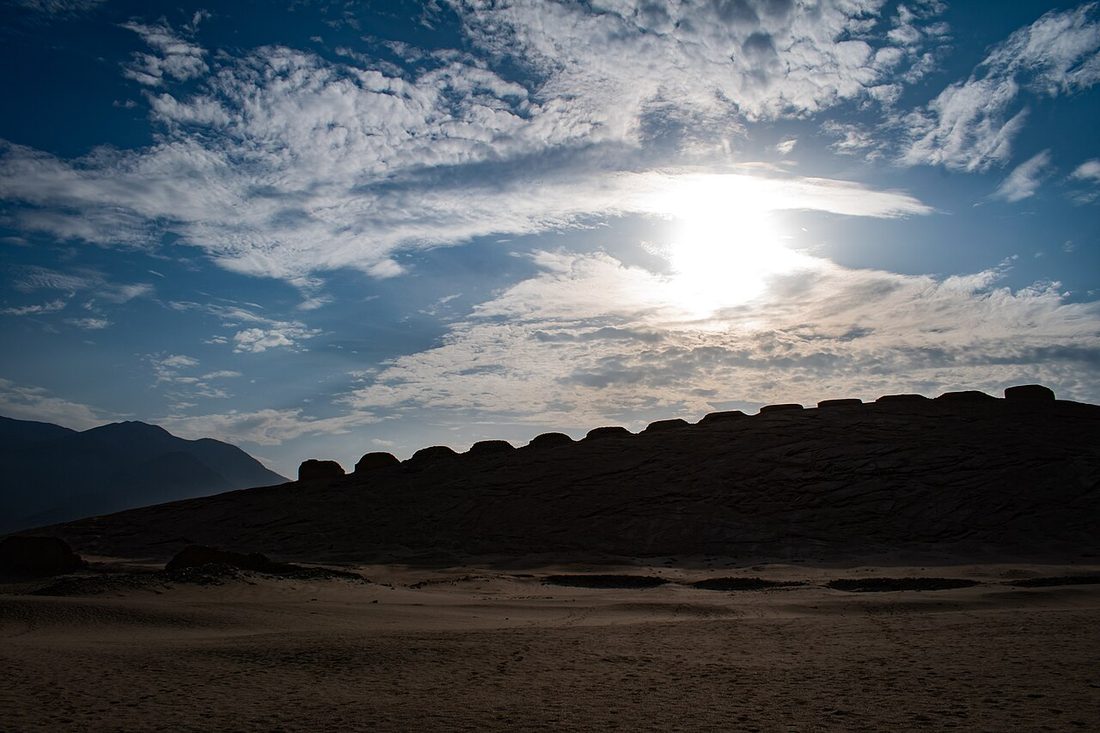
Image: Corrispo, Wikimedia Commons, CC BY-SA 4.0. Resized; not otherwise altered. All credits.
📍 Where It Is Ancash Region (Casma Coast & Cordillera Blanca), Peru -9.5564°, -78.2356°
🏛️ Mainstream Date Chavín c. 1200–500 BCE · Chankillo Thirteen Towers c. 300–200 BCE Excavated baseline
🧭 Leading Edge / Open Angle Verified full-year solar horizon observatory & tuned acoustic tunnels Debated or newly revised
🪨 Heaviest Stone & Quarry 4–10 tons (dressed granite & limestone blocks, hauled 3–15 km) 0.2× the 40-ton test limit · Compare all 64 sites →
30-SECOND TAKEAWAY

In Plain English — The 30-Second Takeaway

What It Is:

Chankillo on the Peruvian coast and Chavín de Huántar in the high Andes are two of South America's oldest stone building landmarks.

What Everyone Agrees On (Measured Facts):

Chankillo's Thirteen Towers span the exact sunrise arc from winter solstice to summer solstice. (c. 250 BCE). Meanwhile, Chavín's underground stone ducts match the pitch of shell trumpets.

🏛️ Mainstream Archaeology View:

UNESCO and sky experts recognize Chankillo as the earliest undisputed full-year solar observatory in the ancient world.

🧭 Leading Edge View:

Acoustic tests inside Chavín de Huántar prove that Andean builders around 1000 BCE engineered underground stone corridors and water drains to boom with specific sound frequencies.

Site Story & Overview

Ancash Region in northern Peru links two of South America's earliest scientific and building landmarks across the Cordillera Negra and Cordillera Blanca. On the arid coast, Chankillo's Thirteen Towers (inscribed by UNESCO in 2021) provide the clearest physical proof anywhere in the ancient world of a monument built directly to track the Sun across its entire annual horizon arc from solstice to solstice.

▸ Read Full Archaeological & Engineering Context

Across the mountains at 3,180 m, Chavín de Huántar (c. 1200–500 BCE) pioneered highland dressed-granite and limestone ashlar masonry, sunken circular and rectangular plazas, tenon heads, and an underground acoustic-hydraulic labyrinth.

✓ What Is Physically Measured on Site

Dated samples, laser scans, stone weights, and dug finds kept separate from opinion.

How carbon dates work, and their limits: How we date sites.

🏛️ Mainstream Archaeological View

  • Accepted timeline: Early Horizon / Formative Andean centres: Chavín de Huántar flourished c. 1200–500 BCE. Chankillo's Thirteen Towers and fortified hilltop temple date to c. 300–200 BCE.
  • Stone & hardness: White biotite granite, black micritic limestone, quartz sandstone & fieldstone — Mohs hardness 6.5 (Chavín granite) / 4.0 (Limestone) (on the 1–10 Mohs scale where a steel knife is ~5.5 and diamond is 10).
  • Quarry distance & alignment: Stone source 3–15 km in Cordillera Blanca (Chavín) / <1 km ridge stone (Chankillo). Orientation: Chankillo 13 Towers span full annual solar horizon arc (±23.5° June to Dec solstice).

🧭 Leading Edge Proposal & Open Questions

  • Archaeoacoustic & ritual engineering studies: Demonstrate that Chavín de Huántar's labyrinth of underground stone galleries, light-ventilation shafts, and hydrodynamic drainage channels was engineered to amplify Strombus shell-trumpet (pututu) frequencies and roaring water sounds during ceremonies [3][2]

Tested Claims About Chankillo Solar Observatory and Chavín de Huántar

ClaimStatusVerdict
Sacsayhuamán & Ollantaytambo vs. Giza & Baalbek: polygonal vs. ashlar megalithic engineering compared
This comparison contrasts the jigsaw walls of Peru and Bolivia with the rectangular megablocks of Giza and Baalbek.
ContestedMeasured in part: Andean builders used mortarless interlocking polygonal andesite/rhyolite/limestone (~50–140 t) suited to a major seismic zone, whereas Giza (up to ~50–80 t granite) and Baalbek (~750–860 t limestone) used rectilinear coursed masonry; blocks above 40 t at all four sites exceed modern experimental replications
Solar alignments & eclipse monuments: solstice, equinox and the August 2, 2027 total eclipse over Luxor & Karnak
This review covers ancient sites proven to track the Sun's solstices and equinoxes, plus the 2027 total eclipse over Egypt.
MainstreamMeasured: solar horizon alignments (solstice and equinox azimuths) at Chankillo, Stonehenge, Newgrange, Karnak and Serpent Mound are physically verified and independent of axial precession; on 2 August 2027, the longest land total solar eclipse of the century (6m 22s) will pass directly over Karnak, Luxor, Abydos and Dendera

Visiting & base stays: Chankillo Thirteen Towers & Chavín de Huántar (Huaraz / Casma base, Ancash, Peru)

FTC affiliate disclosure: Tour links go to GetYourGuide and Viator. Hotel links use Stay22 (aid=solarevidence) for Booking.com and Expedia. If you book a trip, we may earn a small fee at no extra cost to you. All partner links use rel="sponsored nofollow noopener". Check travel alerts before you go. Partner fees never change our ratings. All 64 site field visits · Affiliate disclosure.

📚 Further Reading: Both Sides of the Argument

Top books from both sides of the debate on this topic. Browse all 34 books on Books & Further Reading or visit our Search for the Truth Bookshop.org storefront.

Mainstream Baseline 2014 ★ 4.6/5

The Incas (2nd ed.)

Terence N. D'Altroy

A clear guide to how the Inca built Cusco, Sacsayhuamán, and Ollantaytambo using stone hammers, quarries, and road crews.

▸ Why this book matters to both sides

Columbia University archaeologist Terence D'Altroy's leading survey of Inca origins, Cuzco royal estates, mit'a labor group, Rumiqolqa and Cachiccata quarries, and Andean stone building.

Role in the debate: Presents the mainstream ethnohistoric, carbon, and quarry evidence for fifteenth-century Inca building at Sacsayhuamán and Ollantaytambo alongside the open questions of polygonal fitting. (ISBN 9781444331158)

Mainstream Baseline 2005 ★ 4.6/5

1491: New Revelations of the Americas Before Columbus (2nd ed.)

Charles C. Mann

Shows how new digs and laser maps proved the ancient Americas held big cities, roads, and farms long before Columbus.

▸ Why this book matters to both sides

Surveys the archaeological, botanical, and demographic discoveries showing that the pre-Columbian Americas—from Caral-Supe and the Amazon basin to Cahokia—were older, more populous, and more engineered than once taught.

Role in the debate: Documents how mainstream field evidence overturned the 20th-century 'pristine wilderness' model in the Amazon and pushed giant buildings in Peru back to the third millennium BCE. (ISBN 9781400032051)

Bridge / Debate History 1969 ★ 4.6/5

Hamlet's Mill: An Essay Investigating the Origins of Human Knowledge and Its Transmissions Through Myth

Giorgio de Santillana & Hertha von Dechend

Two science historians argue that ancient stories worldwide preserve real observations of the 26,000-year wobble of the stars.

▸ Why this book matters to both sides

Written by historians of science at MIT and Frankfurt University. The author argues ancient stories worldwide encode technical findings of the 26,000-year sky wobble of the equinoxes and shifting world ages.

Role in the debate: The scholarly bridge between academic history of astronomy and modern sky-sightline claims about sky-cycle coding at Giza, Angkor, and Göbekli Tepe. (ISBN 9780879232153)

Leading Edge 1995 ★ 4.7/5

Fingerprints of the Gods: The Evidence of Earth's Lost Civilization

Graham Hancock

Graham Hancock's bestseller arguing that Giza, Pumapunku, and ancient maps preserve traces of a lost Ice Age culture.

▸ Why this book matters to both sides

Hancock's worldwide bestseller examining Tiwanaku, Pumapunku, Teotihuacan, Giza, the Piri Reis map, and Hapgood's crustal-shift model. It argues for an Ice Age culture lost in a global cataclysm.

Role in the debate: The book that brought the lost-Ice-Age-culture idea to millions of readers and framed the modern debate over Giza, Pumapunku, and ancient sky sightlines. (ISBN 9780517887295)

FTC affiliate disclosure: Book links go to Bookshop.org (ID 130218, Search for the Truth). Each sale helps local bookstores and pays us a 10% fee at no extra cost to you. All partner links use rel="sponsored nofollow noopener". Fees never change our verdicts. Affiliate disclosure.

Primary Academic Sources

▸ View All Cited Primary Sources & DOIs (5 papers)
  1. Ghezzi, I. & Ruggles, C. (2007). Chankillo: a 2300-year-old solar observatory in coastal Peru. Science 315(5816): 1239–1243. doi:10.1126/science.1136415 data
  2. Rick, J. W. (2017). The nature of ritual space at Chavín de Huántar. In Rituals of the Past, University Press ofn Colorado. doi:10.5876/9781607325963.c002 data
  3. Kolar, M. A. (2018). Archaeoacoustics: Re-Sounding Material Culture (Chavín de Huántar subterranean galleries and pututu shell trumpets). Acoustics Today 14(4): 28–37. doi:10.1121/at.2018.14.4.30 data
  4. UNESCO World Heritage Centre: Chankillo Archaeoastronomical Complex (inscribed 2021). https://whc.unesco.org/en/list/1624/ background
  5. UNESCO World Heritage Centre: Chavin (Archaeological Site) (inscribed 1985). https://whc.unesco.org/en/list/330/ background

Dates and stone checks are summed up in plain English from the papers above. Measured facts stay separate from opinion. Methodology.