△ TruthInStone

Sites › Africa › Great Zimbabwe and Nabta Playa

Great Zimbabwe and Nabta Playa

Great Zimbabwe and Nabta Playa
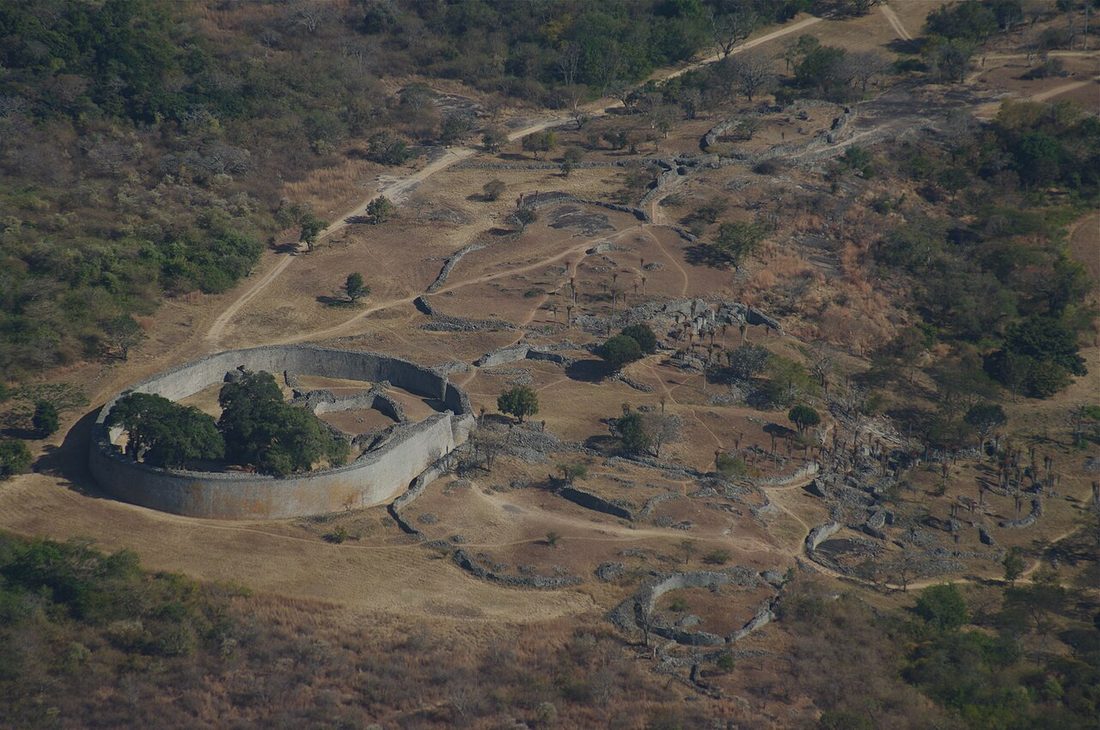
Image: Janice Bell, Wikimedia Commons, CC BY-SA 4.0. Resized; not otherwise altered. All credits.
📍 Where It Is Masvingo Province, Zimbabwe & Nubian Desert, southern Egypt -20.2675°, 30.9333°
🏛️ Mainstream Date Nabta Playa c. 4800–4000 BCE · Great Zimbabwe c. 1100–1450 CE Excavated baseline
🧭 Leading Edge / Open Angle Nabta Playa stone circle predates Stonehenge & Giza by ~2,000 years Debated or newly revised
🪨 Heaviest Stone & Quarry 1–3.5 tons (Nabta Playa megaliths) · ~900,000 mortarless granite blocks (Great Zimbabwe) 0.1× the 40-ton test limit · Compare all 64 sites →
30-SECOND TAKEAWAY

In Plain English — The 30-Second Takeaway

What It Is:

This page pairs two landmark African stone sites: the 6,500-year-old desert stone circle of Nabta Playa in southern Egypt. Also, the 11-meter-tall mortarless granite walls of Great Zimbabwe.

What Everyone Agrees On (Measured Facts):

Nabta Playa's stone circle and buried 3.5-ton bedrock sculptures date to 4800–4000 BCE in the once-green Sahara. Meanwhile, Great Zimbabwe's Great Enclosure holds ~900,000 split granite blocks stacked without mortar.

🏛️ Mainstream Archaeology View:

Every excavation and carbon test confirms Great Zimbabwe was built by ancestral Shona rulers between 1100 and 1450 CE. Meanwhile, Nabta Playa was built by Neolithic cattle herders.

🧭 Leading Edge View:

Astronomer J. McKim Malville showed Nabta Playa's sightlines tracked the summer solstice sunrise nearly 2,000 years before Egypt's First Dynasty or Stonehenge.

Site Story & Overview

Pairing Nabta Playa in the Nubian Sahara with Great Zimbabwe on the southern African plateau highlights the dating depth and building diversity of African stone monuments outside the Nile pyramid belt. At Nabta Playa (~4800–4000 BCE), Neolithic pastoralists erected one of the world's oldest dated sky stone circles and multi-ton underground bedrock sculptures before the drying of the Sahara drove populations toward the Nile Valley—a key archaeological touchstone for discussions of pre-dynastic Egyptian origins.

▸ Read Full Archaeological & Engineering Context

Five thousand km south, Great Zimbabwe (c. 1100–1450 CE) is the largest pre-colonial stone structure in sub-Saharan Africa: its 11 m-high mortarless granite walls were engineered by splitting exfoliating granite sheets into coursed blocks that flex with seasonal soil movement.

✓ What Is Physically Measured on Site

Dated samples, laser scans, stone weights, and dug finds kept separate from opinion.

How carbon dates work, and their limits: How we date sites.

🏛️ Mainstream Archaeological View

  • Accepted timeline: Two distinct African megalithic and dry-stone traditions: Nabta Playa's stone circle and cattle-burial tumuli date to the African Humid Period Neolithic, c. 5500–3300 BCE (calendar circle c. 4800–4000 BCE). Great Zimbabwe was built by ancestral Shona kingdoms between c. 1100 and 1450 CE.
  • Stone & hardness: Exfoliated Archean biotite granite (Great Zimbabwe) & Nubian quartzitic sandstone (Nabta Playa) — Mohs hardness 6.5 (Granite) / 5.5 (Quartzitic sandstone) (on the 1–10 Mohs scale where a steel knife is ~5.5 and diamond is 10).
  • Quarry distance & alignment: Stone source 0.5–2 km (adjacent granite bornhardt domes & Nabta lakebed sandstone outcrops). Orientation: Nabta Playa calendar circle aligned to N–S and ~62°–65° ENE summer solstice sunrise (c. 4800–4000 BCE).

🧭 Leading Edge Proposal & Open Questions

  • 19th-century colonial writers vs. modern archaeological science at Great Zimbabwe; Wendorf, Schild & Malville (1998) at Nabta Playa: At Great Zimbabwe, every modern soil-layer, carbon, and material-culture study since Caton-Thompson (1929) confirms indigenous Shona building (c. 1100–1450 CE). At Nabta Playa, Malville et al. (1998) proposed that the Neolithic stone circle encodes summer solstice and stellar sightlines ~1,500–2,000 years before Stonehenge and Giza [2][1][4][3]

Tested Claims About Great Zimbabwe and Nabta Playa

ClaimStatusVerdict
An advanced civilisation existed during the last Ice Age and was lost in a catastrophe
Did an advanced seafaring culture exist during the Ice Age before floods and impacts destroyed it 12,000 years ago?
Leading EdgeOpen question
Sacsayhuamán & Ollantaytambo vs. Giza & Baalbek: polygonal vs. ashlar megalithic engineering compared
This comparison contrasts the jigsaw walls of Peru and Bolivia with the rectangular megablocks of Giza and Baalbek.
ContestedMeasured in part: Andean builders used mortarless interlocking polygonal andesite/rhyolite/limestone (~50–140 t) suited to a major seismic zone, whereas Giza (up to ~50–80 t granite) and Baalbek (~750–860 t limestone) used rectilinear coursed masonry; blocks above 40 t at all four sites exceed modern experimental replications
Solar alignments & eclipse monuments: solstice, equinox and the August 2, 2027 total eclipse over Luxor & Karnak
This review covers ancient sites proven to track the Sun's solstices and equinoxes, plus the 2027 total eclipse over Egypt.
MainstreamMeasured: solar horizon alignments (solstice and equinox azimuths) at Chankillo, Stonehenge, Newgrange, Karnak and Serpent Mound are physically verified and independent of axial precession; on 2 August 2027, the longest land total solar eclipse of the century (6m 22s) will pass directly over Karnak, Luxor, Abydos and Dendera

Visiting & base stays: Great Zimbabwe Dry-Stone Enclosure (Masvingo) & Nabta Playa Stone Circle (Aswan Museum, Egypt)

FTC affiliate disclosure: Tour links go to GetYourGuide and Viator. Hotel links use Stay22 (aid=solarevidence) for Booking.com and Expedia. If you book a trip, we may earn a small fee at no extra cost to you. All partner links use rel="sponsored nofollow noopener". Check travel alerts before you go. Partner fees never change our ratings. All 64 site field visits · Affiliate disclosure.

📚 Further Reading: Both Sides of the Argument

Top books from both sides of the debate on this topic. Browse all 34 books on Books & Further Reading or visit our Search for the Truth Bookshop.org storefront.

Mainstream Baseline 2017 ★ 4.7/5

Giza and the Pyramids: The Definitive History

Mark Lehner & Zahi Hawass

The Giza dig leaders share 30 years of finds, from the workers' town and stone quarries to Old Kingdom carbon dates.

▸ Why this book matters to both sides

The Giza dig teams' own large-format overview of decades of fieldwork on the plateau. It records the Heit el-Ghurab workers' town, limestone quarries, ramp remnants, and Old Kingdom carbon dates.

Role in the debate: Provides the primary archaeological and soil-layer baseline at Giza against which older-Sphinx, legacy-foundation, and precision-machining proposals are tested. (ISBN 9780226425696)

Mainstream Baseline 2021 ★ 4.5/5

The Dawn of Everything: A New History of Humanity

David Graeber & David Wengrow

Examines how hunter-gatherers built giant stone sites like Göbekli Tepe and Poverty Point without kings or farming.

▸ Why this book matters to both sides

An culture scholar and an archaeologist examine Göbekli Tepe, Karahan Tepe, Poverty Point, Watson Brake, and Teotihuacan. It challenges the textbook step-by-step ladder from small hunter-gatherer bands to states.

Role in the debate: Shows how mainstream archaeology accounts for giant buildings built by hunter-gatherers (Göbekli Tepe, Poverty Point) without invoking a single global parent culture. (ISBN 9781250858801)

Leading Edge 1994 ★ 4.6/5

The Orion Mystery: Unlocking the Secrets of the Pyramids

Robert Bauval & Adrian Gilbert

The book that launched the Orion Correlation, matching the three Giza pyramids to the three stars of Orion's Belt.

▸ Why this book matters to both sides

The book that launched the Orion Correlation Theory, matching the ground plan of Khufu, Khafre, and Menkaure and the angles of the Great Pyramid's four internal shafts to Orion's Belt and Sirius.

Role in the debate: Allows readers to examine Bauval's original shaft-angle and layout geometry alongside mainstream Egyptological and sky-sightline critiques. (ISBN 9780517884546)

Leading Edge 1996 ★ 4.6/5

The Message of the Sphinx: A Quest for the Hidden Legacy of Mankind

Graham Hancock & Robert Bauval

Joins the Sphinx rain-erosion case with sky maps to argue Giza was laid out to mark the spring sky of 10,500 BCE.

▸ Why this book matters to both sides

Joins the Great Sphinx rainfall-erosion argument with sky-cycle sky rebuilds. It argues the Sphinx, Khafre causeway, and Giza pyramids form a unified building horizon marker for 10,500 BCE.

Role in the debate: The primary text for the Sphinx–Leo 10,500 BCE equinox claim and the Hall of Records debate, paired on our pages with our own Vondrák 2011 sky wobble re-checks and Lehner & Hawass's excavation data. (ISBN 9780517888520)

FTC affiliate disclosure: Book links go to Bookshop.org (ID 130218, Search for the Truth). Each sale helps local bookstores and pays us a 10% fee at no extra cost to you. All partner links use rel="sponsored nofollow noopener". Fees never change our verdicts. Affiliate disclosure.

Primary Academic Sources

▸ View All Cited Primary Sources & DOIs (5 papers)
  1. Pikirayi, I. (2001). The Zimbabwe Culture: Origins and Decline of Southern Zambezian States. Walnut Creek: AltaMira Press. https://openlibrary.org/works/OL3574298W data
  2. Chirikure, S. (2020). Great Zimbabwe: Reclaiming a "Confiscated" Past. London: Routledge. doi:10.4324/9780429020193 data
  3. Wendorf, F. & Schild, R. (1998). Nabta Playa and its role in Northeastern African prehistory. Journal of Anthropological Archaeology 17(2): 97–123. doi:10.1006/jaar.1998.0319 data
  4. Malville, J. M., Wendorf, F., Mazar, A. A. & Schild, R. (1998). Megaliths and Neolithic astronomy in southern Egypt (Nabta Playa). Nature 392: 488–491. doi:10.1038/33131 data
  5. UNESCO World Heritage Centre: Great Zimbabwe National Monument (inscribed 1986). https://whc.unesco.org/en/list/364/ background

Dates and stone checks are summed up in plain English from the papers above. Measured facts stay separate from opinion. Methodology.