△ TruthInStone

Sites › South America › Monte Verde

Monte Verde

Monte Verde
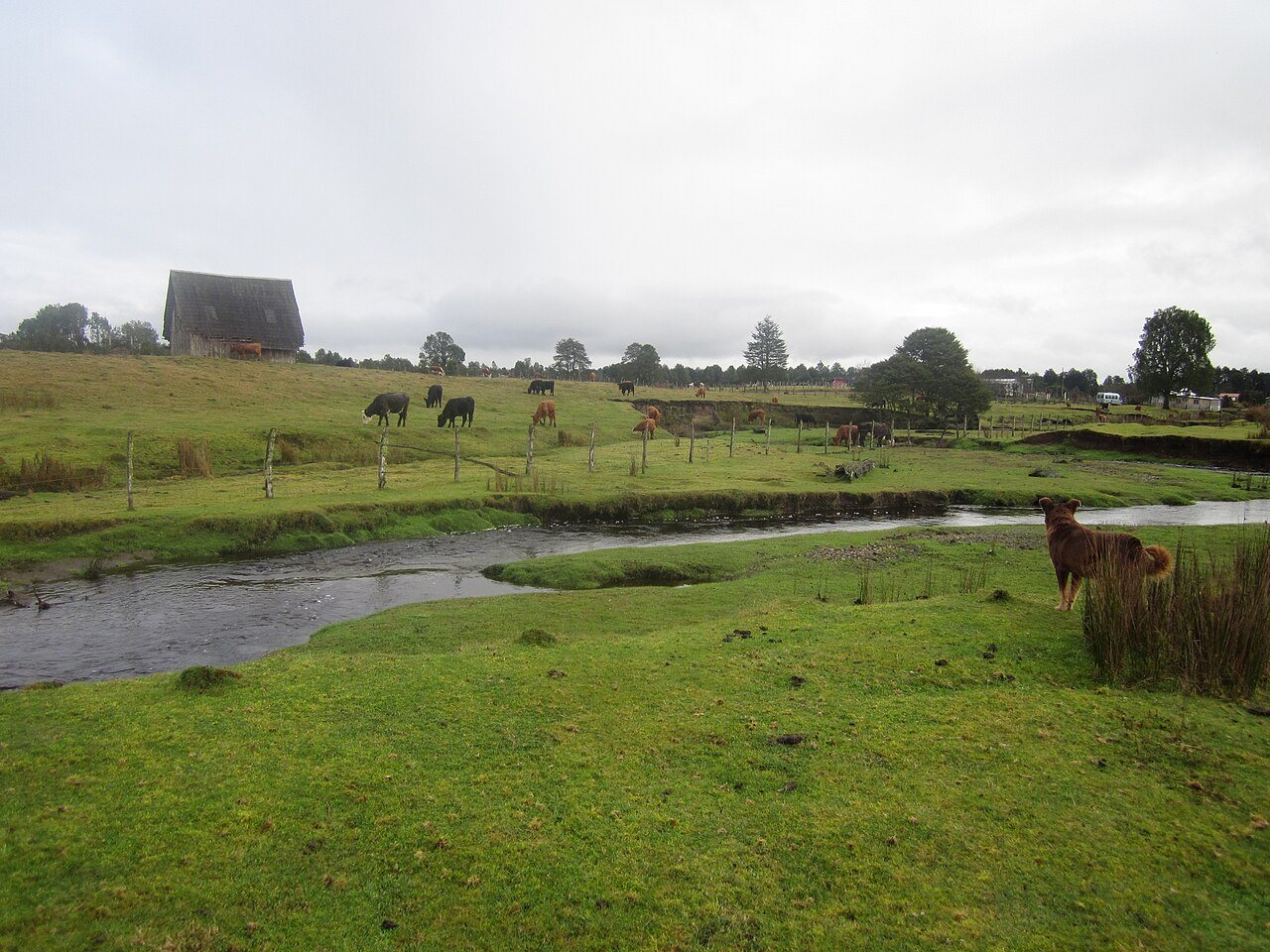
Image: Geología Valdivia, Wikimedia Commons, CC BY 2.0. Resized; not otherwise altered. All credits.
📍 Where It Is Near Puerto Montt, Llanquihue Province, southern Chile -41.5047°, -73.2044°
🏛️ Mainstream Date c. 12,500 BCE (14,500 years ago, pre-Clovis benchmark) Excavated baseline
🧭 Leading Edge / Open Angle Live 2026 debate: 18,500-year claims vs. 2026 younger critique Debated or newly revised
🪨 Heaviest Stone & Quarry Wooden tent frames, hearth stones & coastal seaweed (carried 30–50 km) 0.0× the 40-ton test limit · Compare all 64 sites →
30-SECOND TAKEAWAY

In Plain English — The 30-Second Takeaway

What It Is:

Monte Verde is a waterlogged peat-bog campsite in southern Chile that convinced scholars humans lived in South America before the Clovis culture.

What Everyone Agrees On (Measured Facts):

A wet peat layer preserved wooden tent stakes, knotted cords, a child's footprint. Nine kinds of medicinal Pacific seaweed dated to about 14,500 years ago.

🏛️ Mainstream Archaeology View:

Original excavator Tom Dillehay dates the main camp to 14,500 years ago. And deeper stone flakes to 18,500 years ago. Meanwhile, a 2026 study argued creek wood washed in later.

🧭 Leading Edge View:

Both sides are debating in print right now: Dillehay's 2026 rebuttal notes the critics sampled modern creek banks rather than the dug tent floor.

Site Story & Overview

This is one of the most important dating debates in the Americas, and it is live right now. The newest separate fieldwork points to a much younger age.

▸ Read Full Archaeological & Engineering Context

The original dig teams, who dug the site itself, reject it point by point. The 2026 team studied creek exposures and did not excavate the original site area. The original team sees that as the key weakness of the critique. Both positions are summarised from the authors' own papers.

✓ What Is Physically Measured on Site

Dated samples, laser scans, stone weights, and dug finds kept separate from opinion.

How carbon dates work, and their limits: How we date sites.

🏛️ Mainstream Archaeological View

  • Accepted timeline: Monte Verde II occupation about 14,500 years ago (about 12,500 BCE), long treated as the anchor site for people in the Americas before Clovis.
  • Stone & hardness: Waterlogged timber, peat & glacifluvial creek cobbles — Mohs hardness 5.0 (Quartzite/andesite cobble tools) (on the 1–10 Mohs scale where a steel knife is ~5.5 and diamond is 10).
  • Quarry distance & alignment: Stone source Chinchihuapi Creek bed (seaweed carried ~30–50 km from Pacific coast). Orientation: Streamside camp layout.

🧭 Leading Edge Proposal & Open Questions

  • Surovell et al. (2026): No older than the Middle Holocene (8,200–4,200 years ago): an 11,000-year-old tephra is reported beneath the archaeological layer and the dated wood is argued to be redeposited [4]
  • Dillehay et al. (2015): Possible older traces of human activity in the area, about 18,500–14,500 years ago (cal BP) (stone tools, burned areas) [3]

Tested Claims About Monte Verde

ClaimStatusVerdict
People were in North America 23,000 years ago (White Sands footprints)
Fossil human footprints in White Sands, New Mexico, date to 23,000–21,000 years ago during the peak of the last Ice Age.
ContestedOpen question, leaning to the early date: three dating methods agree on about 23,000–21,000 years, but critics argue all three are maximum ages
Younger Dryas Boundary (YDB) sites directory: chronology, black mats, impact proxies and archaeological transitions
This directory maps the key ice cores, mammoth bone beds, and 'black mat' soil layers from the Younger Dryas freeze 12,800 years ago.
ContestedMeasured: the abrupt Younger Dryas stadial (c. 10,900–9,700 BCE) and organic-rich "black mats" at North American Clovis-horizon sites are well dated; whether the reported platinum, microspherule and nanodiamond peaks across ~50 sites represent a synchronous cosmic airburst/impact remains fiercely contested

Visiting & base stays: Monte Verde & Puerto Montt / Lake District (Los Lagos Region, Chile)

FTC affiliate disclosure: Tour links go to GetYourGuide and Viator. Hotel links use Stay22 (aid=solarevidence) for Booking.com and Expedia. If you book a trip, we may earn a small fee at no extra cost to you. All partner links use rel="sponsored nofollow noopener". Check travel alerts before you go. Partner fees never change our ratings. All 64 site field visits · Affiliate disclosure.

📚 Further Reading: Both Sides of the Argument

Top books from both sides of the debate on this topic. Browse all 34 books on Books & Further Reading or visit our Search for the Truth Bookshop.org storefront.

Mainstream Baseline 2005 ★ 4.6/5

1491: New Revelations of the Americas Before Columbus (2nd ed.)

Charles C. Mann

Shows how new digs and laser maps proved the ancient Americas held big cities, roads, and farms long before Columbus.

▸ Why this book matters to both sides

Surveys the archaeological, botanical, and demographic discoveries showing that the pre-Columbian Americas—from Caral-Supe and the Amazon basin to Cahokia—were older, more populous, and more engineered than once taught.

Role in the debate: Documents how mainstream field evidence overturned the 20th-century 'pristine wilderness' model in the Amazon and pushed giant buildings in Peru back to the third millennium BCE. (ISBN 9781400032051)

Mainstream Baseline 2003 ★ 4.5/5

After the Ice: A Global Human History, 20,000–5000 BC

Steven Mithen

Follows human life across every continent from the peak of the Ice Age (20,000 BCE) to early farming towns (5000 BCE).

▸ Why this book matters to both sides

A continent-by-continent narrative of human life from the Last Glacial Maximum to 5000 BCE, built directly from excavation reports across the Near East (including Göbekli Tepe), Europe, Asia, and the Americas.

Role in the debate: Provides the archaeological baseline for what human populations were building, hunting, and cultivating before, during, and right after the Younger Dryas. (ISBN 9780674019997)

Leading Edge 2019 ★ 4.7/5

America Before: The Key to Earth's Lost Civilization

Graham Hancock

Explores Amazon earthworks, Serpent Mound, ancient DNA, and early American sites to argue for an Ice Age culture in the Americas.

▸ Why this book matters to both sides

Tests pre-Clovis archaeological sites, Ancient North Eurasian DNA signals, Amazonian earthworks, Serpent Mound, and Poverty Point. It argues the Americas were central to an Ice Age cultural network.

Role in the debate: Contrasts directly with Charles Mann's *1491* and mainstream Americanist archaeology on early peopling, Amazon geoglyphs, and North American earthen mounds. (ISBN 9781250756954)

Leading Edge 2006 ★ 4.5/5

The Cycle of Cosmic Catastrophes: How a Stone-Age Comet Changed the Course of World Culture

Richard Firestone, Allen West & Simon Warwick-Smith

The founding book on the Younger Dryas comet impact idea, covering melted microbeads, black mats, and mammoth die-offs.

▸ Why this book matters to both sides

The first book-length presentation of the Younger Dryas impact idea by members of the team that published the 2007 PNAS paper. It details magnetic melted beads, black mats, and Clovis-era giant-animal die-offs.

Role in the debate: Gives the founding supporters' case for the ~12,800 BP Younger Dryas impact boundary, which can be read alongside subsequent separate replications and published critiques. (ISBN 9781591430612)

FTC affiliate disclosure: Book links go to Bookshop.org (ID 130218, Search for the Truth). Each sale helps local bookstores and pays us a 10% fee at no extra cost to you. All partner links use rel="sponsored nofollow noopener". Fees never change our verdicts. Affiliate disclosure.

Primary Academic Sources

▸ View All Cited Primary Sources & DOIs (6 papers)
  1. Dillehay, T. D. et al. (2008). Monte Verde: seaweed, food, medicine, and the peopling of South America. Science 320. doi:10.1126/science.1156533 data
  2. Meltzer, D. J. et al. (1997). On the Pleistocene antiquity of Monte Verde, southern Chile. American Antiquity 62 (report of the 1997 expert site visit). doi:10.2307/281884 background
  3. Dillehay, T. D. et al. (2015). New archaeological evidence for an early human presence at Monte Verde, Chile. PLOS ONE 10 (a correction was later issued). doi:10.1371/journal.pone.0141923 data
  4. Surovell, T. A. et al. (2026). A mid-Holocene age for Monte Verde challenges the timeline of human colonization of South America. Science 391. doi:10.1126/science.adw9217 critique
  5. Dillehay, T. D. et al. (2026). Archaeological and geological evidence at Monte Verde II, Chile, supports a human occupation at about 14,500 years ago. PaleoAmerica 12. doi:10.1080/20555563.2026.2699017 data
  6. Dillehay, T. D. et al. (June 2026). Rebuttal to Surovell et al. on Monte Verde, Chile: interdisciplinary response and supporting data (Zenodo). doi:10.5281/zenodo.20671879 data

Dates and stone checks are summed up in plain English from the papers above. Measured facts stay separate from opinion. Methodology.