△ TruthInStone

Sites › North America › Great Serpent Mound

Great Serpent Mound

Great Serpent Mound
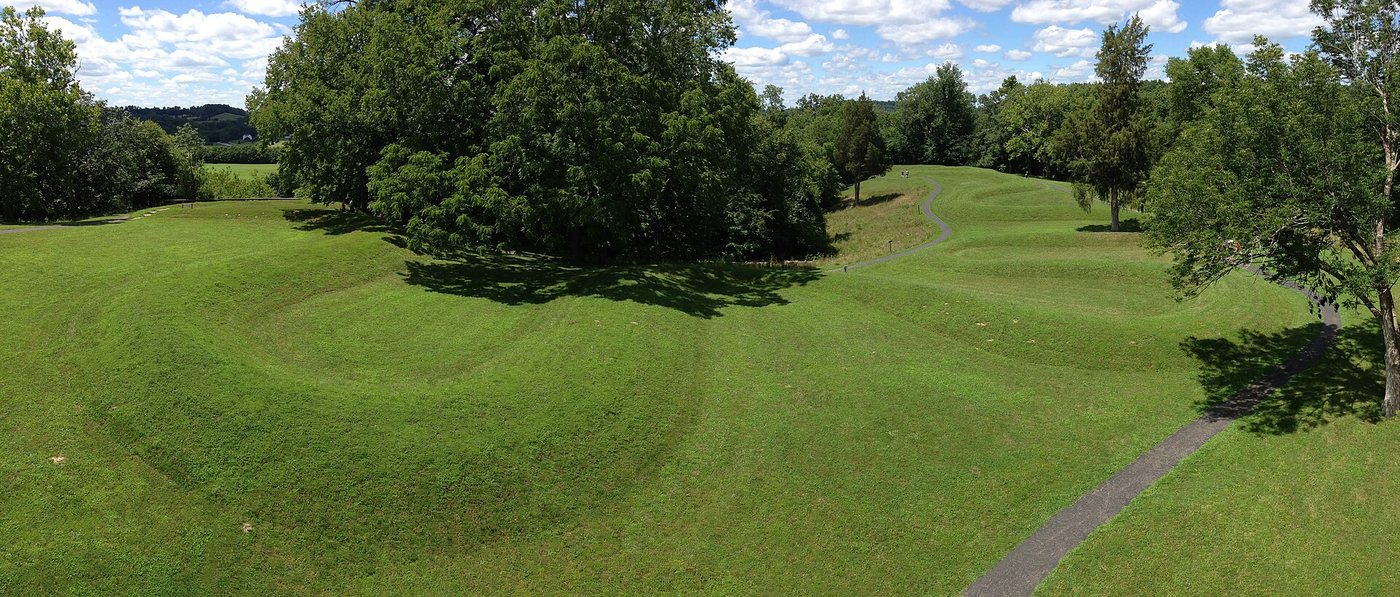
Image: Eric Ewing, Wikimedia Commons, CC BY-SA 3.0. Resized; not otherwise altered. All credits.
📍 Where It Is Peebles, Adams County, Ohio, USA 39.0254°, -83.4303°
🏛️ Mainstream Date Debated: c. 300 BCE (Adena) vs. c. 1070 CE (Fort Ancient) Excavated baseline
🧭 Leading Edge / Open Angle Solstice sunset alignment proposed as a much older tradition Debated or newly revised
🪨 Heaviest Stone & Quarry 411-m-long clay-and-ash effigy built on an ancient impact crater rim 0.0× the 40-ton test limit · Compare all 64 sites →
30-SECOND TAKEAWAY

In Plain English — The 30-Second Takeaway

What It Is:

The Great Serpent Mound is a 411-meter-long earthen sculpture of an uncoiling snake atop a rocky ridge in southern Ohio.

What Everyone Agrees On (Measured Facts):

The serpent's head points toward the summer solstice sunset. ~302°. Meanwhile, soil cores yield two sets of carbon dates: around 300 BCE and around 1070 CE.

🏛️ Mainstream Archaeology View:

Working scholars are split between an Early Woodland Adena origin. ~300 BCE. Also, a Fort Ancient build. (~1070 CE), depending on whether soil or charcoal is dated.

🧭 Leading Edge View:

Graham Hancock highlights its solstice sightline. Also, its location on the rim of a 300-million-year-old meteorite crater.

Site Story & Overview

An earthen effigy of a serpent, about 400 m long, on a ridge above Ohio Brush Creek. The ridge lies within the Serpent Mound Disturbance, a geological structure that the Ohio Geological Survey has described as an impact site. The dating debate is a case where reading the primary data matters: the two camps dated different materials, and each material answers a different question.

✓ What Is Physically Measured on Site

Dated samples, laser scans, stone weights, and dug finds kept separate from opinion.

How carbon dates work, and their limits: How we date sites.

🏛️ Mainstream Archaeological View

  • Accepted timeline: Contested: Fort Ancient culture, about 1000–1100 CE (charcoal dates), or Early Woodland Adena culture, about 300 BCE (soil dates). Both views are held by working archaeologists.
  • Stone & hardness: Yellow clay, ash & Dolomitic limestone base cobbles — Mohs hardness 2.0 (Clay over dolomite base) (on the 1–10 Mohs scale where a steel knife is ~5.5 and diamond is 10).
  • Quarry distance & alignment: Stone source Local Brush Creek bluff (<0.3 km). Orientation: Head/oval faces ~302° azimuth (summer solstice sunset).

🧭 Leading Edge Proposal & Open Questions

  • Herrmann, Monaghan & Romain (2014, 2017): Built about 2,300 years ago by the Adena culture and repaired in Fort Ancient times [1][2]
  • Lepper et al. (2018): Built by the Fort Ancient culture, about 1000–1100 CE [3][4]

Tested Claims About Great Serpent Mound

ClaimStatusVerdict
Serpent Mound's head is aligned to the summer-solstice sunset, and the alignment dates it
Can the summer solstice sunset angle of Ohio's Great Serpent Mound prove the earthwork is 13,000 years old?
ContestedMeasured: the head points close to the summer-solstice sunset, but the sunset has moved less than 1° in 13,000 years, so the alignment cannot date the mound
Solar alignments & eclipse monuments: solstice, equinox and the August 2, 2027 total eclipse over Luxor & Karnak
This review covers ancient sites proven to track the Sun's solstices and equinoxes, plus the 2027 total eclipse over Egypt.
MainstreamMeasured: solar horizon alignments (solstice and equinox azimuths) at Chankillo, Stonehenge, Newgrange, Karnak and Serpent Mound are physically verified and independent of axial precession; on 2 August 2027, the longest land total solar eclipse of the century (6m 22s) will pass directly over Karnak, Luxor, Abydos and Dendera

Visiting & base stays: Great Serpent Mound & Ohio Hopewell Earthworks (Peebles / Cincinnati base, Ohio, USA)

FTC affiliate disclosure: Tour links go to GetYourGuide and Viator. Hotel links use Stay22 (aid=solarevidence) for Booking.com and Expedia. If you book a trip, we may earn a small fee at no extra cost to you. All partner links use rel="sponsored nofollow noopener". Check travel alerts before you go. Partner fees never change our ratings. All 64 site field visits · Affiliate disclosure.

📚 Further Reading: Both Sides of the Argument

Top books from both sides of the debate on this topic. Browse all 34 books on Books & Further Reading or visit our Search for the Truth Bookshop.org storefront.

Mainstream Baseline 2005 ★ 4.6/5

1491: New Revelations of the Americas Before Columbus (2nd ed.)

Charles C. Mann

Shows how new digs and laser maps proved the ancient Americas held big cities, roads, and farms long before Columbus.

▸ Why this book matters to both sides

Surveys the archaeological, botanical, and demographic discoveries showing that the pre-Columbian Americas—from Caral-Supe and the Amazon basin to Cahokia—were older, more populous, and more engineered than once taught.

Role in the debate: Documents how mainstream field evidence overturned the 20th-century 'pristine wilderness' model in the Amazon and pushed giant buildings in Peru back to the third millennium BCE. (ISBN 9781400032051)

Mainstream Baseline 2021 ★ 4.5/5

The Dawn of Everything: A New History of Humanity

David Graeber & David Wengrow

Examines how hunter-gatherers built giant stone sites like Göbekli Tepe and Poverty Point without kings or farming.

▸ Why this book matters to both sides

An culture scholar and an archaeologist examine Göbekli Tepe, Karahan Tepe, Poverty Point, Watson Brake, and Teotihuacan. It challenges the textbook step-by-step ladder from small hunter-gatherer bands to states.

Role in the debate: Shows how mainstream archaeology accounts for giant buildings built by hunter-gatherers (Göbekli Tepe, Poverty Point) without invoking a single global parent culture. (ISBN 9781250858801)

Leading Edge 2019 ★ 4.7/5

America Before: The Key to Earth's Lost Civilization

Graham Hancock

Explores Amazon earthworks, Serpent Mound, ancient DNA, and early American sites to argue for an Ice Age culture in the Americas.

▸ Why this book matters to both sides

Tests pre-Clovis archaeological sites, Ancient North Eurasian DNA signals, Amazonian earthworks, Serpent Mound, and Poverty Point. It argues the Americas were central to an Ice Age cultural network.

Role in the debate: Contrasts directly with Charles Mann's *1491* and mainstream Americanist archaeology on early peopling, Amazon geoglyphs, and North American earthen mounds. (ISBN 9781250756954)

Bridge / Debate History 1969 ★ 4.6/5

Hamlet's Mill: An Essay Investigating the Origins of Human Knowledge and Its Transmissions Through Myth

Giorgio de Santillana & Hertha von Dechend

Two science historians argue that ancient stories worldwide preserve real observations of the 26,000-year wobble of the stars.

▸ Why this book matters to both sides

Written by historians of science at MIT and Frankfurt University. The author argues ancient stories worldwide encode technical findings of the 26,000-year sky wobble of the equinoxes and shifting world ages.

Role in the debate: The scholarly bridge between academic history of astronomy and modern sky-sightline claims about sky-cycle coding at Giza, Angkor, and Göbekli Tepe. (ISBN 9780879232153)

FTC affiliate disclosure: Book links go to Bookshop.org (ID 130218, Search for the Truth). Each sale helps local bookstores and pays us a 10% fee at no extra cost to you. All partner links use rel="sponsored nofollow noopener". Fees never change our verdicts. Affiliate disclosure.

Primary Academic Sources

▸ View All Cited Primary Sources & DOIs (7 papers)
  1. Herrmann, E. W., Monaghan, G. W., Romain, W. F. et al. (2014). A new multistage construction chronology for the Great Serpent Mound, USA. Journal of Archaeological Science 50. doi:10.1016/j.jas.2014.07.004 proponent
  2. Romain, W. F., Herrmann, E. W., Monaghan, G. W. & Burks, J. (2017). Radiocarbon dates reveal Serpent Mound is more than two thousand years old. Midcontinental Journal of Archaeology 42. doi:10.1080/01461109.2017.1371871 proponent
  3. Lepper, B. T. (2018). On the age of Serpent Mound. Midcontinental Journal of Archaeology 43. doi:10.2307/26599968 critique
  4. Lepper, B. T. Who built Serpent Mound? Ohio History Connection (account of the 1991 charcoal dates and the later debate). https://www.ohiohistory.org/who-built-serpent-mound/ background
  5. Lepper, B. T. Evaluating bulk sediment radiocarbon dates from Serpent Mound. Archaeological Society of Ohio (PDF). https://ohioarchaeology.org/file_download/7b68bea3-ebae-486a-9cd8-7d0… critique
  6. Baranoski, M. T. (Ohio Geological Survey) et al. (2001). The Serpent Mound Disturbance of southern Ohio: a structurally complex impact site with hydrocarbon potential (abstract). AAPG Bulletin 85. doi:10.1306/8626caff-173b-11d7-8645000102c1865d background
  7. Truth in Stone (2026). Serpent Mound summer-solstice sunset azimuth check: Python script, released under CC0 1.0. /static/downloads/serpent-mound-solstice.py data

Dates and stone checks are summed up in plain English from the papers above. Measured facts stay separate from opinion. Methodology.