△ TruthInStone

Claims › Megalithic construction › How the world's megaliths were moved: what is shown, what is inferred, and where the gaps are

How the world's megaliths were moved: what is shown, what is inferred, and where the gaps are

Status: Contested Verdict: Measured in part: sledges, wetted or timber tracks, ramps and boats are documented, and finished monuments show ancient moves of about 750–860 t; no test of ancient methods we found goes above about 40 t, and the 1,000 t-plus Baalbek blocks never left the quarry
30-SECOND TAKEAWAY

In Plain English — The 30-Second Takeaway

What It Is:

Can wooden sledges, ropes, wet sand, and dirt ramps explain how ancient crews moved stones weighing 80 to 860 tons?

What Everyone Agrees On (Measured Facts):

Ancient art and roads prove sledges and ramps were used. However, the heaviest stone moved in a modern ancient-tool test is 40 tons.

🏛️ Mainstream Archaeology View:

Engineers calculate that scaling up wooden sledges, winches, and teams of hundreds of haulers can move multi-hundred-ton stones.

🧭 Leading Edge View:

Critics note nobody has ever moved an 80-ton, 140-ton, or 800-ton block in a real field test using only ancient wood and rope.

Overview & Context

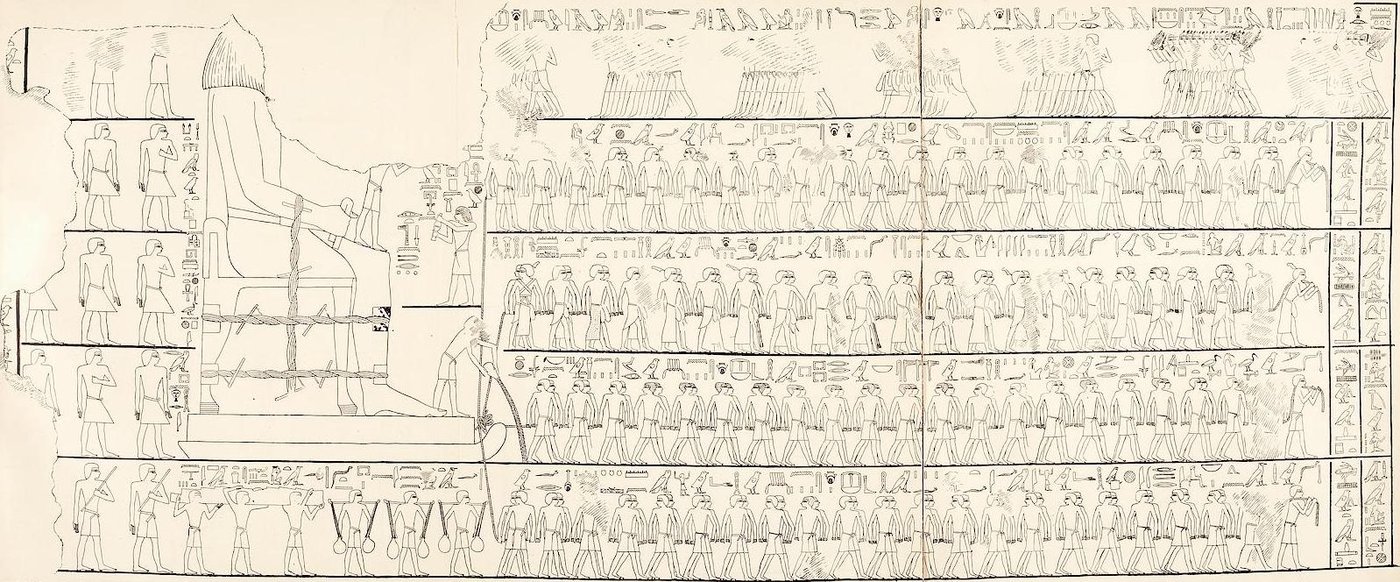
Every megalith tells two stories: where the stone came from, which can now be measured, and how it travelled, which is usually inferred. In Egypt the strongest evidence is pictorial and documentary: the Djehutihotep painting shows a colossal statue on a sledge with a man pouring liquid in front of it, papyri from Khufu's reign record boats carrying limestone to Giza, and a 2024 study traced a buried Nile branch running past 31 pyramids.

▸ Read Technical Background, Full Claim Wording & Academic Literature History

Formal claim tested: Known ancient-tool methods (sledges hauled over wetted sand or timber tracks, ropes, levers, ramps and river boats) are enough to explain how ancient builders moved the great stones of Egypt, Britain, Baalbek, the Andes and Rapa Nui.

Where the evidence stands: A great deal is now measured: a tomb painting of a statue on a sledge, a laboratory friction test, dated quarries with loading platforms, a steep quarry ramp, mineral fingerprints that tie stones to sources hundreds of km away, and a buried branch of the Nile beside the pyramids. The weak point is scale. Most experiments moved one to a few tons. The largest we found is about 40 t, hauled up a gentle 1:20 slope on a greased sledge over timber rails in a 1997 Stonehenge building test. Finished monuments prove that ancient builders did move blocks of roughly 750–860 t, but how they did it is reconstructed, not showed. The largest blocks at Baalbek (about 1,000 to at least 1,650 t) were never moved at all. Leading Edge authors read that gap as room for lost methods. Mainstream researchers read it as a gap in testing, not in ability.

In Britain, mineral fingerprints link Stonehenge's bluestones to quarries in west Wales and its Altar Stone to north-east Scotland, but the routes are unknown. In the Andes, drag marks and ramps survive at Ollantaytambo, yet the man who studied them most closely left key handling problems unsolved. On Rapa Nui, statues were probably 'walked' upright (see the walking moai claim). The gap is at the top end: the Baalbek trilithon (see the Baalbek claim) and Egypt's largest colossi were moved, but nobody has re-enacted anything close to that size with ancient tools. Related: the Altar Stone claim, the Andean masonry claim and the Giza radiocarbon claim.

✓ What Has Been Physically Measured

Dates, physical measurements, and excavated findings kept separate from interpretation.

How carbon dates work, and their limits: How we date sites.

🧭 Proponents' Case & Cited Evidence

  • The Amsterdam team argues: that the Djehutihotep painting and their friction results together show the Egyptians knew wetting the sand in front of a sledge reduced the effort needed. [4][5]
  • Key finding: Monnier calculates about 400 kg hauled per man in the Djehutihotep scene, close to ratios in other Egyptian records, and notes carved texts in the Wadi Hammamat quarries that mention up to 2,000 workers on such operations. [2]
  • Ancient Nile river branch: Ghoneim and colleagues argue that valley temples at the ends of the causeways acted as river harbours and that the Ahramat Branch carried workers and materials, which fits the papyri of boats delivering limestone to Giza. [6][7]
  • Parker Pearson and colleagues note: that the quarry dates coincide with a date of 3080–2890 BCE from Stonehenge's Aubrey Hole 32, which they interpret as an early bluestone socket. They also cite a local account of Preseli pillars of similar size being dragged across dry grass as gate-posts. [13]
  • Key finding: Harris argues from experiments and ethnography (for example on Nias and Sumba in Indonesia) that sledges hauled over fixed timber slipways are more reliable than loose rollers, and that large crews were often part of the point of the event. [27][26]
  • 800-ton Trilithon wall blocks: For Baalbek, Adam's standard 1977 study proposes cedar rollers and six capstans worked by 24 men each to move one trilithon block about 800 m from the quarry, and 16 larger capstans with 32 men each to set it (as summarised by Hancock). [21][30]
  • Key finding: On Rapa Nui, the shapes of statues abandoned along the roads, the road profiles and the way fallen statues lie fit upright 'walking', which a replica reproduced. [25]

🏛️ Mainstream Archaeological View & Evidence

  • Leading Edge: Graham Hancock notes that the trilithon's bases sit more than 6 m above the ground and argues that the roller-and-capstan proposals have real difficulties. For example, he says checks indicate wooden rollers would be crushed under such loads. He also points to local traditions that giants or demons placed the stones, and to the possibility that the megalithic course is older than the Roman temple. [30][21]
  • Key finding: Ayrinhac's 2016 force analysis concludes that the Djehutihotep haul needed excellent team coordination, and that friction was probably reduced by some method other than plain wood-on-sand or wood-on-wood contact, so wet sand alone may not explain it. He also warns that the original painting is damaged and that many published copies fill in missing parts. [3]
  • Key finding: Monnier notes that a tribology study could not reach a firm conclusion because there are too many unknown variables, and that only full-scale experiments can settle how friction was reduced. [2][3]
  • Ancient Nile river branch: The Ahramat paper measures the branch's position and size. Its use as a building-materials waterway is the authors' suggestion, based on the layout of causeways and temples rather than on boat remains or dated harbour works. [6]
  • Key finding: Brichieri-Colombi argues that the Hatnub posts would have acted as bollards, giving no mechanical advantage, and that such a ramp would not suit pyramid building. [10]
  • Key finding: How and by which route the Welsh and Scottish stones reached Salisbury Plain (overland or by sea) is inferred, not observed. Brian John disputes that Waun Mawn in Wales was a dismantled early stone circle linked to Stonehenge, and warns of 'interpretative inflation' in the Welsh evidence. Timothy Darvill (2022) also argues the Waun Mawn evidence fits a series of small local stone settings, and that a Welsh 'source circle' for Stonehenge is unsupported. Still, not excluded. Parker Pearson's team replied the same year defending their reading. [14][17][31][32]
  • Protzen left problems unsolved: Where 2,400 haulers could stand on an 8 m ramp. How 100 t stones were repeatedly lifted and lowered during trial fitting. And how fine-dressed andesite blocks from the Rumiqolqa quarry, about 35 km from Cuzco, were moved, since they show no drag marks. [19][20]
  • 800-ton Trilithon wall blocks: The largest ancient-style experiment we found (about 40 t, Richards and Whitby 1997) is roughly 20 times lighter than a Baalbek trilithon block. The 32 t Bougon block could only be moved over level ground. The later moves of 327 t and about 1,500 t used capstans, winches or horses, so they show what is possible, not what was done in antiquity. [27][28][24]

🔬 What Future Tests Would Settle It

A full-scale haul of a 50–100 t block over wetted sand or a timber track, with a crew the size of the one in the Djehutihotep painting, would test the Egyptian method directly. Boat remains or dated harbour works on the Ahramat Branch, sealed building ramps or sledge tracks at Ollantaytambo or Baalbek, and a showed way of lifting and setting an 800 t block with ancient tools would close most of the remaining gap. Finding the exact Altar Stone outcrop in Scotland would narrow its route.

Line drawing of an Egyptian tomb painting: a large seated statue on a sledge pulled by four rows of men, with a man at the front of the sledge pouring liquid onto the ground
The colossus-hauling scene in the tomb of Djehutihotep at Deir el-Bersha (12th Dynasty), as copied by Percy E. Newberry, El Bersheh I (1895). The painting is now damaged; this is Newberry's facsimile. Public domain, via Wikimedia Commons.
▸ View Engineering Callout Sources (37 lettered references)
  1. Richards, J. & Whitby, M. (1997). The engineering of Stonehenge. In Cunliffe, B. & Renfrew, C. (eds), Science and Stonehenge. Proceedings of the British Academy 92: 231–256 (PDF). https://www.thebritishacademy.ac.uk/documents/3921/92p231.pdf data
  2. NOVA (PBS airdate 12 Feb 1997). Secrets of Lost Empires: Obelisk, transcript: a forty-ton obelisk (US tons, about 36 t) dragged on a sledge at Aswan; it was not raised. https://www.pbs.org/wgbh/nova/transcripts/2405obelisk.html data
  3. NOVA (PBS airdate 8 Feb 2000). Secrets of Lost Empires: Pharaoh's Obelisk, transcript: a 25-ton block dragged on a timber roadbed and a 25-ton (perhaps 30-ton) obelisk raised from a sand pit. https://www.pbs.org/wgbh/nova/transcripts/27poobelisk.html data
  4. Li, J. & Chen, Z. (2016). Lubrication for transporting heavy objects in the history. Tribology Online 11(2): 242–249 (includes the Japanese shura sledge experiments). doi:10.2474/trol.11.242 background
  5. Harris, B. (2018). Moving megaliths: time to park the rollers. British Archaeology 163: 30–35 (author's accepted manuscript, UCL Discovery). https://discovery.ucl.ac.uk/id/eprint/10114174/ background
  6. Truth in Stone (2026). Baalbek block-mass recomputation: Python script, released under CC0 1.0. /static/downloads/baalbek-block-masses.py data
  7. Lohmann, D. (2010). Giant strides towards monumentality – the architecture of the Jupiter sanctuary in Baalbek/Heliopolis. Bollettino di Archeologia on line, special volume (PDF). https://bollettinodiarcheologiaonline.beniculturali.it/wp-content/upl… data
  8. German Archaeological Institute press release via idw (21 Nov 2014). Lebanese–German team finds the largest known ancient stone block in Baalbek (in German): 19.60 × 6 × at least 5.5 m, about 1,650 t. https://idw-online.de/en/news614672 data
  9. Truth in Stone (2026). Scale-gap block-mass recomputations (Pumapunku slabs, Aswan unfinished obelisk): Python script, released under CC0 1.0. /static/downloads/scale-gap-block-masses.py data
  10. Engelbach, R. (1922). The Aswân Obelisk, with some remarks on the ancient engineering. Cairo: Service des Antiquités (Project Gutenberg text). https://gutenberg.org/files/59320/59320-h/59320-h.htm data
  11. French Ministry of Culture. Les mégalithes du Morbihan: the Grand Menhir and others (Grand Menhir Brisé, Locmariaquer: 20.6 m, about 280 t, moved about 10 km). https://archeologie.culture.gouv.fr/megalithes/en/grand-menhir-and-others background
  12. MINCETUR, Peru. Inventario de recursos turísticos: Parque Arqueológico de Saqsaywaman (gives a block of more than 120 t, about 8.5 × 5 m). https://consultasenlinea.mincetur.gob.pe/fichaInventario/index.aspx?c… background
  13. Protzen, J.-P. (1986). Inca stonemasonry. Scientific American 254(2): 94–105. doi:10.1038/scientificamerican0286-94 data
  14. Science Frontiers no. 44 (Mar–Apr 1986). How the Incas worked stone (summary of Protzen 1986, with his ramp, block-mass and crew figures). https://www.science-frontiers.com/sf044/sf044p01.htm background
  15. Wikipedia. Pumapunku: Engineering (secondary summary of the slab dimensions and masses published by Ponce Sanginés and colleagues). https://en.wikipedia.org/wiki/Pumapunku background
  16. Ponce Sanginés, C. & Mogrovejo Terrazas, G. (1970). Acerca de la procedencia del material lítico de los monumentos de Tiwanaku. La Paz: Academia Nacional de Ciencias de Bolivia (library record). https://www.si.edu/object/siris_sil_62813 data
  17. NOVA Online. Secrets of Easter Island: moai sizes (Paro about 82 tons, moved about 6 km; El Gigante never left the quarry). https://www.pbs.org/wgbh/nova/easter/civilization/giants.html background
  18. Easter Island Statue Project. Statue Paro (about 9.8 m, about 82 t). https://eisp.org/1954/ background
  19. Lipo, C. P. & Hunt, T. L. (2025). The walking moai hypothesis: archaeological evidence, experimental validation, and response to critics. Journal of Archaeological Science 183: 106383. doi:10.1016/j.jas.2025.106383 data
  20. Scheuring, S. (2025). Construction of the Great Pyramid with pulley-like systems using counter-weights on sliding-ramps. npj Heritage Science 13 (gives King's Chamber granite blocks of up to about 60 t). doi:10.1038/s40494-025-02018-w background
  21. Mariette, A. (1882; ed. G. Maspero). Le Sérapéum de Memphis. Paris: F. Vieweg (digitised by Heidelberg University Library). https://digi.ub.uni-heidelberg.de/diglit/mariette1882 data
  22. Dodson, A. (2005). Bull Cults (Apis burials and the Serapeum of Saqqara). In Ikram, S. (ed.), Divine Creatures: Animal Mummies in Ancient Egypt, American University in Cairo Press, pp. 72–105. doi:10.5743/cairo/9789774248580.003.0004 data
  23. Wikipedia. Serapeum of Saqqara: Greater Vaults (secondary summary of the sarcophagus masses, dates and inscriptions). https://en.wikipedia.org/wiki/Serapeum_of_Saqqara background
  24. Paludan, A. (1991). The Chinese Spirit Road: The Classical Tradition of Stone Tomb Statuary. New Haven: Yale University Press (documents the 1405 Yongle Yangshan stele project and Xiaoling). https://openlibrary.org/works/OL1893640W data
  25. UNESCO World Heritage Centre: Imperial Tombs of the Ming and Qing Dynasties — Ming Xiaoling Mausoleum, Nanjing (inscribed 2000/2003). https://whc.unesco.org/en/list/1004/ background
  26. Kidder, J. E. (1972). Early Buddhist Japan. London: Thames & Hudson (covers Asuka stone monuments, Ishibutai Kofun and Masuda-no-Iwafune). https://openlibrary.org/works/OL4993446W data
  27. Barnes, G. L. (2007). State Formation in Japan: Emergence of a 4th-Century Ruling Elite. London: Routledge (megalithic Kofun chamber engineering). doi:10.4324/9780203462874 data
  28. López Luján, L. (2010). Tlaltecuhtli. Mexico City: INAH / Sexto Piso (monograph on the 12-tonne andesite monolith). https://www.mesoweb.com/es/articulos/sub/Tlaltecuhtli.pdf data
  29. Matos Moctezuma, E. (1988). The Great Temple of the Aztecs: Treasures of Tenochtitlan. London: Thames & Hudson (Open Library record). https://openlibrary.org/works/OL2697387W data
  30. Srinivasan, K. R. (1991). The Brihadisvara Temple at Tanjavur. Archaeological Survey of India monograph series. https://asi.nic.in/ data
  31. Michell, G. (1995). Architecture and Art of Southern India. The New Cambridge History of India I:6. Cambridge University Press. doi:10.1017/CHOL9780521441100 data
  32. UNESCO World Heritage Centre: Great Living Chola Temples (inscribed 1987, extended 2004). https://whc.unesco.org/en/list/250/ background
  33. Looper, M. G. (2003). Lightning Warrior: Maya Art and Kingship at Quirigua. Austin: University of Texas Press. doi:10.7560/705562 data
  34. UNESCO World Heritage Centre: Archaeological Park and Ruins of Quirigua (inscribed 1981). https://whc.unesco.org/en/list/149/ background
  35. Williams, H. & Heizer, R. F. (1965). Sources of rocks used in Olmec monuments. Contributions of the University of California Archaeological Research Facility 1: 1–39. https://escholarship.org/uc/item/59c6x86w data
  36. Cyphers, A. (2012). Las viejasใหมेश de San Lorenzo: cronología y escultura monumental olmeca. Mexico City: UNAM Instituto de Investigaciones Antropológicas. https://www.iia.unam.mx/ data
  37. Pool, C. A. (2007). Olmec Archaeology and Early Mesoamerica. Cambridge: Cambridge University Press. doi:10.1017/CBO9781139167147 data

Ancient Sites Involved

Giza pyramids · Baalbek megaliths · Sacsayhuamán and Ollantaytambo · Stonehenge · Rapa Nui (Easter Island) moai and Rano Raraku · The Serapeum of Saqqara (Egypt) · Yangshan Quarry Megaliths (Nanjing) · Ishibutai Kofun and the Asuka Megaliths (Masuda-no-Iwafune & Sakafuneishi) · San Lorenzo and La Venta (Olmec Colossal Heads & Basalt Transport) · Quiriguá (Stela E) and Copán · Brihadeeswarar Temple (Thanjavur) and Hampi (Vijayanagara) · Plain of Jars (Xiangkhouang Megalithic Jar Sites) · Bada, Besoa and Napu Valley Megaliths (Lore Lindu) · Tenochtitlan and the Templo Mayor (plus Coatlinchan Monolith) · Sigiriya, Anuradhapura (Jetavanaramaya) and Polonnaruwa

Related Tested Claims

📚 Further Reading: Both Sides of the Argument

Top books from both sides of the debate on this topic. Browse all 34 books on Books & Further Reading or visit our Search for the Truth Bookshop.org storefront.

Mainstream Baseline 2017 ★ 4.7/5

Giza and the Pyramids: The Definitive History

Mark Lehner & Zahi Hawass

The Giza dig leaders share 30 years of finds, from the workers' town and stone quarries to Old Kingdom carbon dates.

▸ Why this book matters to both sides

The Giza dig teams' own large-format overview of decades of fieldwork on the plateau. It records the Heit el-Ghurab workers' town, limestone quarries, ramp remnants, and Old Kingdom carbon dates.

Role in the debate: Provides the primary archaeological and soil-layer baseline at Giza against which older-Sphinx, legacy-foundation, and precision-machining proposals are tested. (ISBN 9780226425696)

Mainstream Baseline 2014 ★ 4.6/5

The Incas (2nd ed.)

Terence N. D'Altroy

A clear guide to how the Inca built Cusco, Sacsayhuamán, and Ollantaytambo using stone hammers, quarries, and road crews.

▸ Why this book matters to both sides

Columbia University archaeologist Terence D'Altroy's leading survey of Inca origins, Cuzco royal estates, mit'a labor group, Rumiqolqa and Cachiccata quarries, and Andean stone building.

Role in the debate: Presents the mainstream ethnohistoric, carbon, and quarry evidence for fifteenth-century Inca building at Sacsayhuamán and Ollantaytambo alongside the open questions of polygonal fitting. (ISBN 9781444331158)

Mainstream Baseline 2014 ★ 4.4/5

Stonehenge: A New Understanding — Solving the Mysteries of the Greatest Stone Age Monument

Mike Parker Pearson

The leader of the Stonehenge digs explains the latest carbon dates, solstice sightlines, and stone quarries.

▸ Why this book matters to both sides

The director of the Stonehenge Riverside Project details the digs at Stonehenge, Durrington Walls, and Bluestonehenge, including Bayesian carbon dates, solstice axes, and quarry sourcing.

Role in the debate: Establishes the dug timeline and solstice sightline baseline for British and European megaliths. (ISBN 9781615191932)

Leading Edge 2010 ★ 4.7/5

Lost Technologies of Ancient Egypt: Advanced Engineering in the Temples of the Pharaohs

Christopher Dunn

An engineer measures Egyptian granite boxes, statues, and drill cores with precision gauges to argue for advanced ancient tools.

▸ Why this book matters to both sides

Manufacturing engineer Christopher Dunn applies straightedges, radius gauges, and optical comparators to the Serapeum granite sarcophagi, Luxor Ramses statues, and Petrie's drill cores. It argues for high-speed mechanical tooling.

Role in the debate: Provides the primary Leading Edge metrology claims on Egyptian granite symmetry and flatness, contrasted on our precision pages with test copper-saw, tubular-drill, and pounder replications. (ISBN 9781591431022)

FTC affiliate disclosure: Book links go to Bookshop.org (ID 130218, Search for the Truth). Each sale helps local bookstores and pays us a 10% fee at no extra cost to you. All partner links use rel="sponsored nofollow noopener". Fees never change our verdicts. Affiliate disclosure.

Primary Academic Sources

▸ View All Cited Primary Sources & DOIs (36 papers)
  1. Newberry, P. E. (1895). El Bersheh, Part I: The Tomb of Tehuti-hetep. Egypt Exploration Fund (facsimile drawing of the colossus-hauling scene; digitised by Heidelberg University Library). https://digi.ub.uni-heidelberg.de/diglit/newberry1895bd1/0066 data
  2. Monnier, F. (2020). La scène de traction du colosse de Djéhoutyhotep: description, traduction et reconstitution. Journal of Ancient Egyptian Architecture 4: 55–72 (in French; CC BY-NC). https://web.ujaen.es/investiga/egiptologia/journalarchitecture/downlo… data
  3. Ayrinhac, S. (2016). The transportation of the Djehutihotep statue revisited. Tribology Online 11(2): 466–473. doi:10.2474/trol.11.466 data
  4. Fall, A., Weber, B., Pakpour, M., Lenoir, N., Shahidzadeh, N., Fiscina, J., Wagner, C. & Bonn, D. (2014). Sliding friction on wet and dry sand. Physical Review Letters 112: 175502. doi:10.1103/PhysRevLett.112.175502 data
  5. University of Amsterdam, Institute of Physics (29 April 2014). Ancient Egyptians transported pyramid stones over wet sand (press release on Fall et al. 2014). https://iop.uva.nl/content/news/2014/00/prl-egyptian-pyramids.html background
  6. Ghoneim, E. et al. (2024). The Egyptian pyramid chain was built along the now abandoned Ahramat Nile Branch. Communications Earth & Environment 5. doi:10.1038/s43247-024-01379-7 data
  7. Tallet, P. (2017). Les papyrus de la mer Rouge I: le 'journal de Merer' (MIFAO 136). IFAO, Cairo (publisher's summary). https://www.ifao.egnet.net/uploads/publications/divers/MIFAO136_ann_01.pdf data
  8. Sheisha, H. et al. (2022). Nile waterscapes facilitated the construction of the Giza pyramids during the 3rd millennium BCE. PNAS 119. doi:10.1073/pnas.2202530119 data
  9. University of Liverpool news (2 Nov 2018). Ancient quarry ramp system may have helped workers build Egypt's Great Pyramids (Hatnub, IFAO–Liverpool mission; statements by R. Enmarch and Y. Gourdon). https://news.liverpool.ac.uk/2018/11/02/ancient-quarry-ramp-system-ma… data
  10. Brichieri-Colombi, S. The ramp at Hatnub quarry: no solution for pyramids. PalArch's Journal of Archaeology of Egypt/Egyptology. https://web.archive.org/web/20231017102832/https://archives.palarch.n… critique
  11. Bevins, R. E., Ixer, R. A. & Pearce, N. J. G. (2014). Carn Goedog is the likely major source of Stonehenge doleritic bluestones. Journal of Archaeological Science 42. doi:10.1016/j.jas.2013.11.009 data
  12. Parker Pearson, M. et al. (2015). Craig Rhos-y-felin: a Welsh bluestone megalith quarry for Stonehenge. Antiquity 89. doi:10.15184/aqy.2015.177 data
  13. Parker Pearson, M. et al. (2019). Megalith quarries for Stonehenge's bluestones. Antiquity 93 (author's accepted manuscript at UCL Discovery). doi:10.15184/aqy.2018.111 data
  14. Clarke, A. J. I. et al. (2024). A Scottish provenance for the Altar Stone of Stonehenge. Nature 632. doi:10.1038/s41586-024-07652-1 data
  15. Bevins, R. E. et al. (2024). Was the Stonehenge Altar Stone from Orkney? Mineralogy and geochemistry of Orcadian Old Red sandstones and Neolithic circle monuments. Journal of Archaeological Science: Reports 58. doi:10.1016/j.jasrep.2024.104738 data
  16. Clarke, A. J. I. & Kirkland, C. L. (2026). Detrital zircon–apatite fingerprinting challenges glacial transport of Stonehenge's megaliths. Communications Earth & Environment 7. doi:10.1038/s43247-025-03105-3 data
  17. John, B. (2024). The Stonehenge bluestones did not come from Waun Mawn in West Wales. The Holocene. doi:10.1177/09596836241236318 critique
  18. Protzen, J.-P. (1985). Inca quarrying and stonecutting. Journal of the Society of Architectural Historians 44(2). doi:10.2307/990027 data
  19. Protzen, J.-P. (1986). Inca stonemasonry. Scientific American 254(2): 94–105. doi:10.1038/scientificamerican0286-94 data
  20. Science Frontiers no. 44 (Mar–Apr 1986). How the Incas worked stone (summary of Protzen 1986, with his ramp, block-mass and crew figures). https://www.science-frontiers.com/sf044/sf044p01.htm background
  21. Adam, J.-P. (1977). À propos du trilithon de Baalbek: le transport et la mise en œuvre des mégalithes. Syria 54 (in French). doi:10.3406/syria.1977.6623 background
  22. Lohmann, D. (2010). Giant strides towards monumentality – the architecture of the Jupiter sanctuary in Baalbek/Heliopolis. Bollettino di Archeologia on line, special volume (PDF). https://bollettinodiarcheologiaonline.beniculturali.it/wp-content/upl… data
  23. German Archaeological Institute press release via idw (21 Nov 2014). Lebanese–German team finds the largest known ancient stone block in Baalbek (in German): 19.60 × 6 × at least 5.5 m, about 1,650 t. https://idw-online.de/en/news614672 data
  24. Truth in Stone (2026). Baalbek block-mass recomputation: Python script, released under CC0 1.0. /static/downloads/baalbek-block-masses.py data
  25. Lipo, C. P. & Hunt, T. L. (2025). The walking moai hypothesis: archaeological evidence, experimental validation, and response to critics. Journal of Archaeological Science 183: 106383. doi:10.1016/j.jas.2025.106383 data
  26. Harris, B. (2016). Profile: Moving Stonehenge. Public Archaeology 15(2–3): 148–156 (UCL sledge-and-slipway experiment). doi:10.1080/14655187.2016.1261250 data
  27. Harris, B. (2018). Moving megaliths: time to park the rollers. British Archaeology 163: 30–35 (author's accepted manuscript, UCL Discovery). https://discovery.ucl.ac.uk/id/eprint/10114174/ background
  28. Saint Petersburg Encyclopaedia. Thunder-stone (pedestal of the Bronze Horseman): about 1,600 t; overland transport began 1 April 1769; set on Senate Square 26 September 1770. https://www.encspb.ru/object/2855726198?lc=en background
  29. Guinness World Records. Largest stone moved by manpower alone: the Thunder Stone, about 1,500 t, moved 6 km overland on a metal sledge. https://guinnessworldrecords.com/world-records/90339-largest-stone-mo… background
  30. Hancock, G. (2015). Magicians of the Gods. Coronet / Thomas Dunne Books. https://openlibrary.org/search?q=magicians+of+the+gods+hancock proponent
  31. Darvill, T. (2022). Mythical rings? Waun Mawn and Stonehenge Stage 1. Antiquity 96. doi:10.15184/aqy.2022.82 critique
  32. Parker Pearson, M. et al. (2022). How Waun Mawn stone circle was designed and built, and when the Bluestones arrived at Stonehenge: a response to Darvill. Antiquity 96. doi:10.15184/aqy.2022.132 data
  33. Richards, J. & Whitby, M. (1997). The engineering of Stonehenge. In Cunliffe, B. & Renfrew, C. (eds), Science and Stonehenge. Proceedings of the British Academy 92: 231–256 (PDF). https://www.thebritishacademy.ac.uk/documents/3921/92p231.pdf data
  34. NOVA (PBS airdate 12 Feb 1997). Secrets of Lost Empires: Obelisk, transcript: a forty-ton obelisk (US tons, about 36 t) dragged on a sledge at Aswan; it was not raised. https://www.pbs.org/wgbh/nova/transcripts/2405obelisk.html data
  35. NOVA (PBS airdate 8 Feb 2000). Secrets of Lost Empires: Pharaoh's Obelisk, transcript: a 25-ton block dragged on a timber roadbed and a 25-ton (perhaps 30-ton) obelisk raised from a sand pit. https://www.pbs.org/wgbh/nova/transcripts/27poobelisk.html data
  36. Li, J. & Chen, Z. (2016). Lubrication for transporting heavy objects in the history. Tribology Online 11(2): 242–249 (includes the Japanese shura sledge experiments). doi:10.2474/trol.11.242 background

More in this section: Megalithic construction.

Sources checked against Crossref and publisher pages on 2026-10-23. This entry presents a debated idea neutrally: the proponents' case first, then the mainstream position, in plain English. "Open question" is not a judgment that the idea is true or false. Labels describe the claim, not the people who hold it. Methodology.