△ TruthInStone

Claims › Megalithic construction › Precision and shaping in ancient stonework: what has been measured, what has been replicated

Precision and shaping in ancient stonework: what has been measured, what has been replicated

Status: Leading Edge Verdict: Measured in part: tolerances of about 0.25–0.5 mm (Giza casing) and ±1–2 mm survey precision (Tiwanaku) are documented; copper-and-sand and hammerstone methods are replicated at small scale; how the sharpest interior angles, Petrie's spiral-grooved core and the finest vessels were finished is an open question
30-SECOND TAKEAWAY

In Plain English — The 30-Second Takeaway

What It Is:

Did tight stone joints, flat granite boxes, drill cores, and stone vases require advanced machine tools?

What Everyone Agrees On (Measured Facts):

Giza casing joints average 0.5 mm wide, and Pumapunku blocks are flat within 1 mm. A 2025 3D scan study matched museum vases to hand grinding.

🏛️ Mainstream Archaeology View:

Experts have cut granite with copper saws and wet sand grit, dressed andesite with cobbles, and ground stone vases by hand.

🧭 Leading Edge View:

Engineers like Christopher Dunn point to spiral drill grooves, sharp inner corners, and mirror-smooth boxes as signs of advanced tools.

Overview & Context

This page gathers the measured tolerances behind the precision debate and keeps them apart from what is inferred. It is the companion to the megalith transport review, which deals with block mass.

▸ Read Technical Background, Full Claim Wording & Academic Literature History

Formal claim tested: Some ancient stonework, including Pumapunku's H-blocks, the polygonal joints of Cusco, Egyptian granite boxes and drill cores, and predynastic stone vases, is too precise to have been made with the copper, stone and abrasive tools known from the archaeological record.

Where the evidence stands: The precision is real and some of it is measured: Petrie put the mean Great Pyramid casing joint at about 0.5 mm, and Protzen and Nair surveyed Tiwanaku stones to ±1 mm and found repeated standard sizes. Replications show that copper saws and drills with sand cut granite, and that hammerstones and trial fitting produce Inca-style joints, but the tests were small and slow. The mainstream authors themselves leave open how Tiwanaku's crisp interior right angles were cut. The only peer-reviewed metrology study of predynastic vases found them consistent with skilled hand grinding, not lathe work. Claims of machine-level precision rest mostly on untraced pieces and on scans that have not been peer reviewed.

Site-specific discussions: the Pumapunku claim and the Andean polygonal masonry claim. The questions are different at each site. At Pumapunku it is the flat faces and sharp interior angles in sandstone and andesite. In Cusco and at Ollantaytambo it is the tight fit of many-sided blocks. In Egypt it is hard stone (granite, basalt, diorite) that was sawn, drilled and hollowed. The stone-softening and geopolymer ideas propose that some blocks were softened or cast rather than carved.

Computation & method notes: How archaeologists measure masonry: A 2026 study shows a new way to measure stonework across a whole town. At Shivta, a Late Antique town in the Negev Desert, drones, close-up photos and machine learning measured about 235,000 surface stones and 12,000 stones in 604 walls. The software scored each stone's size and shape and how the wall was laid. Larger, more regular stones were used while the town grew most. Methods like this let researchers compare building quality across a site, not just in a few walls. [21]

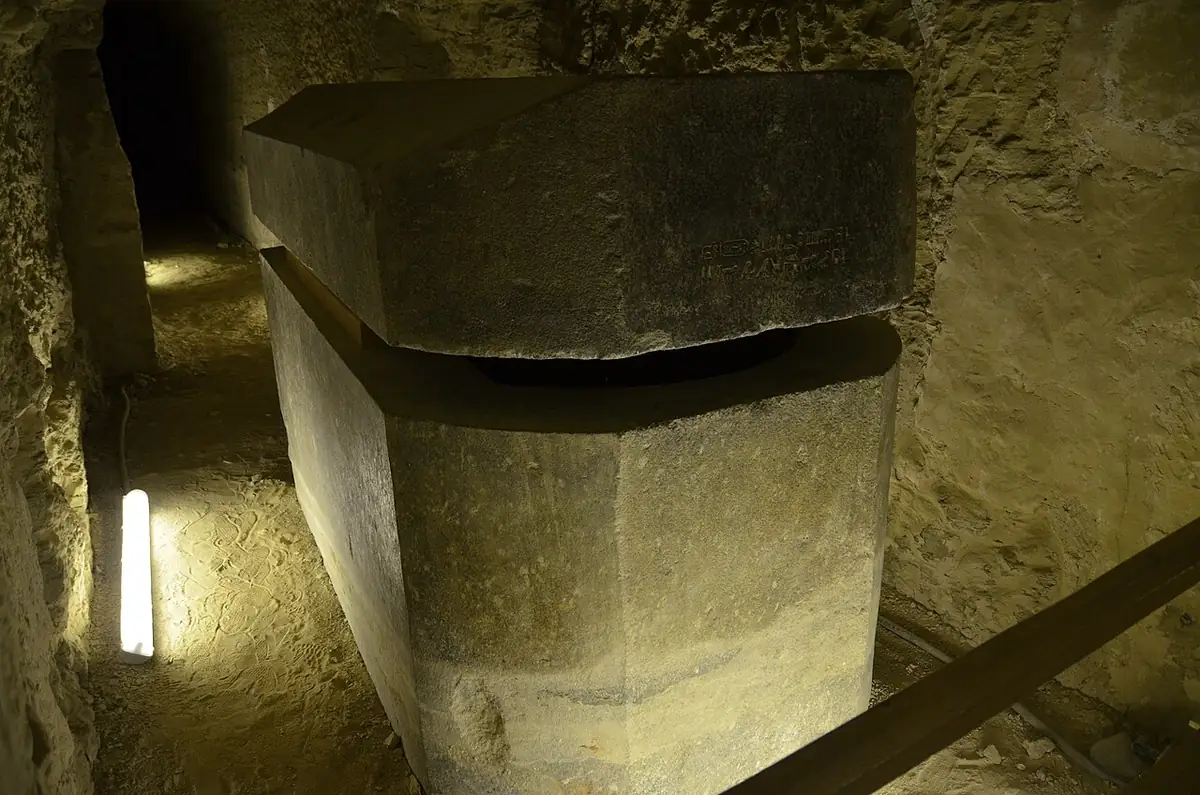
A massive granite box in the Serapeum at Saqqara
A granite box in the Serapeum at Saqqara. Image: Carole Raddato, CC BY-SA 2.0, via Wikimedia Commons. Resized.
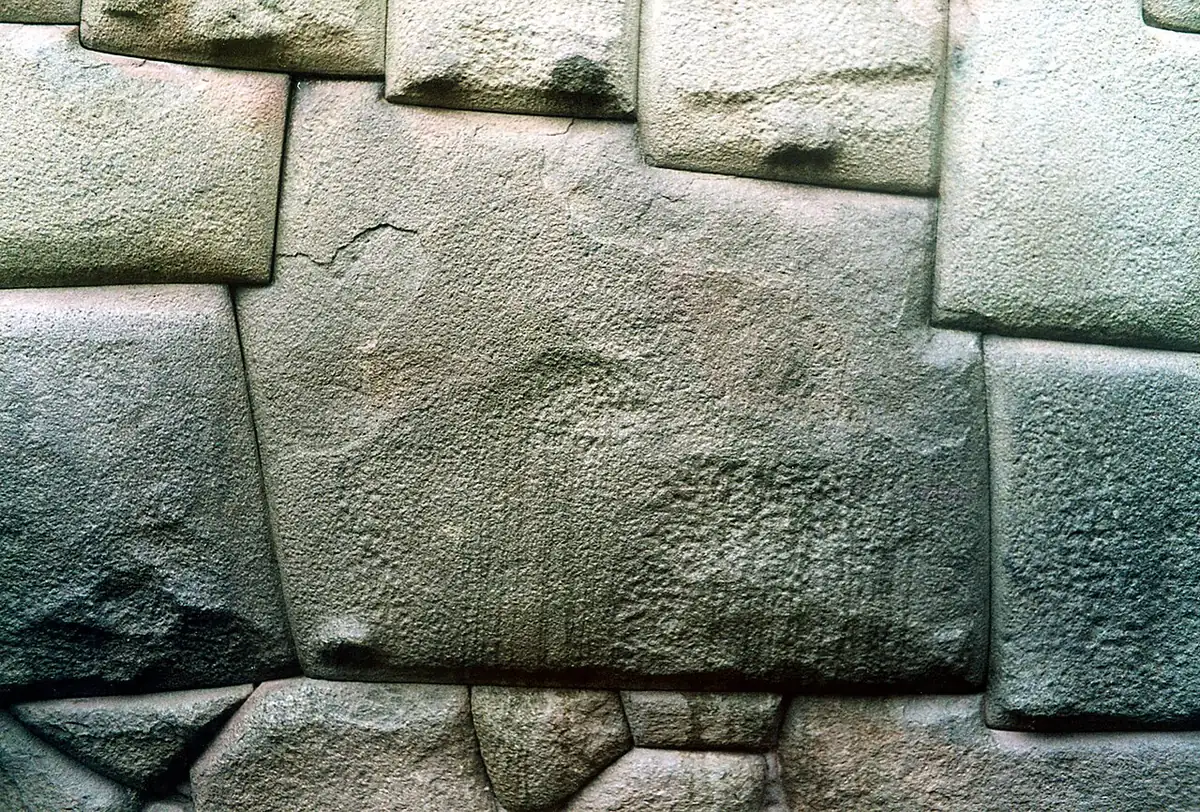
Close view of tightly fitted polygonal stone joints in Cusco
Fitted polygonal joints in Cusco. Image: Xauxa , Håkan Svensson, CC BY 2.5, via Wikimedia Commons. Resized.

✓ What Has Been Physically Measured

Dates, physical measurements, and excavated findings kept separate from interpretation.

🧭 Proponents' Case & Cited Evidence

  • Christopher Dunn, an engineer reports: that Serapeum box surfaces passed checks with a straightedge rated to 0.0002 in and a square calibrated to 0.00005 in, and that the inside corners have radii of about 4 mm. He argues this level of flatness and squareness has no purpose for a burial box, implies precise tools, and calls the Late Period dating into question. His checks are not peer reviewed and give pass/fail results, not numbers. [8]
  • Granite drill cores and saws: Petrie concluded that only fixed cutting points under heavy pressure, at least a ton or two on a 4-inch drill, could have cut core No. 7's spiral, and that loose powder would have cut the softer feldspar more deeply than the quartz. [1]
  • The Artifact Foundation reports: a 2017 scan of the untraced granite "OG Vase" with exterior roundness as low as 0.0094 mm and a median of about 0.016 mm, and calls the method a mystery. This report is not peer reviewed. [9]
  • Cast-stone vs. quarry rock: Davidovits and colleagues (2019) report SEM and rock-mineral features in Pumapunku sandstone and andesite that they read as cast geopolymer. Barsoum and colleagues (2006) and MacKenzie and colleagues (2011) report similar artificial-binder signatures in Giza and Bent Pyramid limestone. All three are peer reviewed. [10][11][12][13]
  • Key finding: Even Protzen and Nair conclude that Tiwanaku's finishes used techniques unknown to the Incas and to modern researchers, and that the crisp interior angles were most likely not made with hammerstones. The tools they propose have not been found. [2]

🏛️ Mainstream Archaeological View & Evidence

  • Key finding: Stocks (Aswan, 1999) sawed and drilled rose granite with copper tools and sand: a slot 3 cm deep and 95 cm long took 14 hours, and the blade lost 7.5 mm. The work is slow but feasible with large, organised workforces. [14][15][16]
  • Key finding: Gorelick and Gwinnett (1983) drilled granite with copper tubes and found that emery, corundum or diamond in water or oil leaves concentric lines like those on ancient cores. Meanwhile, loose quartz sand leaves none. This favours a hard loose abrasive over fixed jewel points, though it does not explain the spiral. [17]
  • Key finding: Protzen reproduced Inca dressing and fitting with river-cobble hammerstones and repeated trial fitting, and found the work went quickly with simple means. [4]
  • 3D scans of stone vases: The 2025 vase study reads the predynastic vessels as ground (turned against a grinding block outside, hollowed with boring bars inside), probably with quartz-sand slurry, and calls their quality remarkable for such simple tools. [6]
  • Quarry ramps and haul roads: Rock source studies tie the stones to natural quarries: Pumapunku sandstone to outcrops about 10 km away, Ollantaytambo rhyolite to Kachiqhata, and Aswan granite to quarries that still hold partly cut pieces such as the unfinished obelisk. The earliest stone-softening stories (1638, 1674) describe a woodpecker's herb that dissolved iron, not a building method. [18][4][19][20]

🔬 What Future Tests Would Settle It

Several tests would narrow this down. Publish Serapeum and Giza surface data as numbers (flatness maps from a laser tracker or structured-light scan), with uncertainties and peer review. Run a blind metrology study of excavated vessels from dug contexts alongside test replicas made by grinding. Make a microscopic tool-mark comparison of Tiwanaku interior angles with test chisel, punch and abrasive work. Reproduce a continuous spiral groove like core No. 7 with copper and loose abrasive. Have a separate lab compare monument samples with samples from the source quarries to test the geopolymer readings.

▸ View Engineering Callout Sources (69 lettered references)
  1. Richards, J. & Whitby, M. (1997). The engineering of Stonehenge. In Cunliffe, B. & Renfrew, C. (eds), Science and Stonehenge. Proceedings of the British Academy 92: 231–256 (PDF). https://www.thebritishacademy.ac.uk/documents/3921/92p231.pdf data
  2. NOVA (PBS airdate 12 Feb 1997). Secrets of Lost Empires: Obelisk, transcript: a forty-ton obelisk (US tons, about 36 t) dragged on a sledge at Aswan; it was not raised. https://www.pbs.org/wgbh/nova/transcripts/2405obelisk.html data
  3. NOVA (PBS airdate 8 Feb 2000). Secrets of Lost Empires: Pharaoh's Obelisk, transcript: a 25-ton block dragged on a timber roadbed and a 25-ton (perhaps 30-ton) obelisk raised from a sand pit. https://www.pbs.org/wgbh/nova/transcripts/27poobelisk.html data
  4. Li, J. & Chen, Z. (2016). Lubrication for transporting heavy objects in the history. Tribology Online 11(2): 242–249 (includes the Japanese shura sledge experiments). doi:10.2474/trol.11.242 background
  5. Harris, B. (2018). Moving megaliths: time to park the rollers. British Archaeology 163: 30–35 (author's accepted manuscript, UCL Discovery). https://discovery.ucl.ac.uk/id/eprint/10114174/ background
  6. Truth in Stone (2026). Baalbek block-mass recomputation: Python script, released under CC0 1.0. /static/downloads/baalbek-block-masses.py data
  7. Lohmann, D. (2010). Giant strides towards monumentality – the architecture of the Jupiter sanctuary in Baalbek/Heliopolis. Bollettino di Archeologia on line, special volume (PDF). https://bollettinodiarcheologiaonline.beniculturali.it/wp-content/upl… data
  8. German Archaeological Institute press release via idw (21 Nov 2014). Lebanese–German team finds the largest known ancient stone block in Baalbek (in German): 19.60 × 6 × at least 5.5 m, about 1,650 t. https://idw-online.de/en/news614672 data
  9. Truth in Stone (2026). Scale-gap block-mass recomputations (Pumapunku slabs, Aswan unfinished obelisk): Python script, released under CC0 1.0. /static/downloads/scale-gap-block-masses.py data
  10. Engelbach, R. (1922). The Aswân Obelisk, with some remarks on the ancient engineering. Cairo: Service des Antiquités (Project Gutenberg text). https://gutenberg.org/files/59320/59320-h/59320-h.htm data
  11. French Ministry of Culture. Les mégalithes du Morbihan: the Grand Menhir and others (Grand Menhir Brisé, Locmariaquer: 20.6 m, about 280 t, moved about 10 km). https://archeologie.culture.gouv.fr/megalithes/en/grand-menhir-and-others background
  12. MINCETUR, Peru. Inventario de recursos turísticos: Parque Arqueológico de Saqsaywaman (gives a block of more than 120 t, about 8.5 × 5 m). https://consultasenlinea.mincetur.gob.pe/fichaInventario/index.aspx?c… background
  13. Protzen, J.-P. (1986). Inca stonemasonry. Scientific American 254(2): 94–105. doi:10.1038/scientificamerican0286-94 data
  14. Science Frontiers no. 44 (Mar–Apr 1986). How the Incas worked stone (summary of Protzen 1986, with his ramp, block-mass and crew figures). https://www.science-frontiers.com/sf044/sf044p01.htm background
  15. Wikipedia. Pumapunku: Engineering (secondary summary of the slab dimensions and masses published by Ponce Sanginés and colleagues). https://en.wikipedia.org/wiki/Pumapunku background
  16. Ponce Sanginés, C. & Mogrovejo Terrazas, G. (1970). Acerca de la procedencia del material lítico de los monumentos de Tiwanaku. La Paz: Academia Nacional de Ciencias de Bolivia (library record). https://www.si.edu/object/siris_sil_62813 data
  17. NOVA Online. Secrets of Easter Island: moai sizes (Paro about 82 tons, moved about 6 km; El Gigante never left the quarry). https://www.pbs.org/wgbh/nova/easter/civilization/giants.html background
  18. Easter Island Statue Project. Statue Paro (about 9.8 m, about 82 t). https://eisp.org/1954/ background
  19. Lipo, C. P. & Hunt, T. L. (2025). The walking moai hypothesis: archaeological evidence, experimental validation, and response to critics. Journal of Archaeological Science 183: 106383. doi:10.1016/j.jas.2025.106383 data
  20. Scheuring, S. (2025). Construction of the Great Pyramid with pulley-like systems using counter-weights on sliding-ramps. npj Heritage Science 13 (gives King's Chamber granite blocks of up to about 60 t). doi:10.1038/s40494-025-02018-w background
  21. Mariette, A. (1882; ed. G. Maspero). Le Sérapéum de Memphis. Paris: F. Vieweg (digitised by Heidelberg University Library). https://digi.ub.uni-heidelberg.de/diglit/mariette1882 data
  22. Dodson, A. (2005). Bull Cults (Apis burials and the Serapeum of Saqqara). In Ikram, S. (ed.), Divine Creatures: Animal Mummies in Ancient Egypt, American University in Cairo Press, pp. 72–105. doi:10.5743/cairo/9789774248580.003.0004 data
  23. Wikipedia. Serapeum of Saqqara: Greater Vaults (secondary summary of the sarcophagus masses, dates and inscriptions). https://en.wikipedia.org/wiki/Serapeum_of_Saqqara background
  24. Paludan, A. (1991). The Chinese Spirit Road: The Classical Tradition of Stone Tomb Statuary. New Haven: Yale University Press (documents the 1405 Yongle Yangshan stele project and Xiaoling). https://openlibrary.org/works/OL1893640W data
  25. UNESCO World Heritage Centre: Imperial Tombs of the Ming and Qing Dynasties — Ming Xiaoling Mausoleum, Nanjing (inscribed 2000/2003). https://whc.unesco.org/en/list/1004/ background
  26. Kidder, J. E. (1972). Early Buddhist Japan. London: Thames & Hudson (covers Asuka stone monuments, Ishibutai Kofun and Masuda-no-Iwafune). https://openlibrary.org/works/OL4993446W data
  27. Barnes, G. L. (2007). State Formation in Japan: Emergence of a 4th-Century Ruling Elite. London: Routledge (megalithic Kofun chamber engineering). doi:10.4324/9780203462874 data
  28. López Luján, L. (2010). Tlaltecuhtli. Mexico City: INAH / Sexto Piso (monograph on the 12-tonne andesite monolith). https://www.mesoweb.com/es/articulos/sub/Tlaltecuhtli.pdf data
  29. Matos Moctezuma, E. (1988). The Great Temple of the Aztecs: Treasures of Tenochtitlan. London: Thames & Hudson (Open Library record). https://openlibrary.org/works/OL2697387W data
  30. Srinivasan, K. R. (1991). The Brihadisvara Temple at Tanjavur. Archaeological Survey of India monograph series. https://asi.nic.in/ data
  31. Michell, G. (1995). Architecture and Art of Southern India. The New Cambridge History of India I:6. Cambridge University Press. doi:10.1017/CHOL9780521441100 data
  32. UNESCO World Heritage Centre: Great Living Chola Temples (inscribed 1987, extended 2004). https://whc.unesco.org/en/list/250/ background
  33. Looper, M. G. (2003). Lightning Warrior: Maya Art and Kingship at Quirigua. Austin: University of Texas Press. doi:10.7560/705562 data
  34. UNESCO World Heritage Centre: Archaeological Park and Ruins of Quirigua (inscribed 1981). https://whc.unesco.org/en/list/149/ background
  35. Williams, H. & Heizer, R. F. (1965). Sources of rocks used in Olmec monuments. Contributions of the University of California Archaeological Research Facility 1: 1–39. https://escholarship.org/uc/item/59c6x86w data
  36. Cyphers, A. (2012). Las viejasใหมेश de San Lorenzo: cronología y escultura monumental olmeca. Mexico City: UNAM Instituto de Investigaciones Antropológicas. https://www.iia.unam.mx/ data
  37. Pool, C. A. (2007). Olmec Archaeology and Early Mesoamerica. Cambridge: Cambridge University Press. doi:10.1017/CBO9781139167147 data
  38. Protzen, J.-P. & Nair, S. (1997). Who taught the Inca stonemasons their skills? A comparison of Tiahuanaco and Inca cut-stone masonry. Journal of the Society of Architectural Historians 56(2): 146–167. doi:10.2307/991281 data
  39. Vranich, A. (2018). Reconstructing ancient architecture at Tiwanaku, Bolivia: the potential and promise of 3D printing. Heritage Science 6. doi:10.1186/s40494-018-0231-0 data
  40. Davidovits, J., Huaman, L. & Davidovits, R. (2019). Ancient geopolymer in south-American monument. SEM and petrographic evidence. Materials Letters 235. doi:10.1016/j.matlet.2018.10.033 proponent
  41. BBC News Mundo (20 Feb 2025). Qué es la piedra de los 12 ángulos de Cusco (green diorite, about 6 t, in the wall of Inca Roca's palace). https://www.bbc.com/mundo/articles/cx20l9nn59eo background
  42. Protzen, J.-P. (1985). Inca quarrying and stonecutting. Journal of the Society of Architectural Historians 44(2). doi:10.2307/990027 data
  43. Wikipedia. Ollantaytambo: Temple Hill and quarries (secondary summary of Protzen 1993 on the Kachiqhata rhyolite quarries and the Wall of the Six Monoliths). https://en.wikipedia.org/wiki/Ollantaytambo background
  44. Colavito, J. Inca stone-dissolving plants: translated primary texts (Calancha 1638, Rosales 1674, Bingham 1909, Fawcett 1953). https://www.jasoncolavito.com/inca-stone-dissolving-plants.html background
  45. Petrie, W. M. F. (1883). The Pyramids and Temples of Gizeh. London: Field & Tuer (casing-joint measurements, §26; tubular drilling and core No. 7, §§130–133; Internet Archive scan). https://archive.org/details/cu31924012038927 data
  46. Dunn, C. (2001/2003). The amazing boxes of the Serapeum (engineer's field checks with straightedge, square and radius gauges; self-published, not peer reviewed). https://gizapower.com/gizeh/articles/the-precision-of-the-ancient-egy… proponent
  47. Stocks, D. A. (2001). Testing ancient Egyptian granite-working methods in Aswan, Upper Egypt. Antiquity 75. doi:10.1017/s0003598x00052777 data
  48. Science Frontiers no. 137 (Sep–Oct 2001). Granite-working in ancient Egypt (summary of Stocks 2001: a 3 cm × 95 cm saw slot in 14 hours; the blade lost 7.5 mm). https://www.science-frontiers.com/sf137/sf137p01.htm background
  49. Stocks, D. A. (2003). Experiments in Egyptian Archaeology: Stoneworking Technology in Ancient Egypt. London: Routledge. doi:10.4324/9780203430231 data
  50. Gorelick, L. & Gwinnett, A. J. (1983). Ancient Egyptian stone-drilling: an experimental perspective on a scholarly disagreement. Expedition 25(3): 40–47. https://dialnet.unirioja.es/servlet/articulo?codigo=4748785 data
  51. Fomitchev-Zamilov, M. (2025). A metrological method for manufacturing quality assessment and classification of ancient Egyptian stone vessels. npj Heritage Science 13: 659 (peer reviewed; the author is with Maximus Energy Corporation). doi:10.1038/s40494-025-02196-7 data
  52. Artifact Foundation. OG Vase scan report (privately commissioned metrology of an unprovenanced vessel; not peer reviewed). https://artifactfoundation.org/og-vase proponent
  53. Barsoum, M. W., Ganguly, A. & Hug, G. (2006). Microstructural evidence of reconstituted limestone blocks in the Great Pyramids of Egypt. Journal of the American Ceramic Society 89(12). doi:10.1111/j.1551-2916.2006.01308.x proponent
  54. MacKenzie, K. J. D. et al. (2011). Were the casing stones of Senefru's Bent Pyramid in Dahshour cast or carved? Materials Letters 65(2): 350–352. doi:10.1016/j.matlet.2010.10.035 proponent
  55. Davidovits, J., Huaman, L. & Davidovits, R. (2019). Ancient organo-mineral geopolymer in South-American monuments: organic matter in andesite stone. Ceramics International 45. doi:10.1016/j.ceramint.2019.01.024 proponent
  56. Falk, H. (2006). Aśokan Sites and Artefacts: A Source-Book with Bibliography. Mainz: Philipp von Zabern (monograph on the Barabar and Nagarjuni inscriptions and cave dimensions). https://openlibrary.org/works/OL20341815W data
  57. Huntington, J. C. (1974). Lomās Ṛṣi: another look. Archives of Asian Art 28: 34–56. https://www.jstor.org/stable/20111071 data
  58. BAM (Bâtisseurs de l'Ancien Monde) Acoustic, Contact Profilometry & 3D Laser Metrology Reports on the Barabar and Nagarjuni Caves (2022–2023). Room-scale terrestrial 3D laser scanning (~2.5 mm point-cloud uncertainty), handheld contact surface profilometry (Ra ~0.1–0.3 µm), and acoustic testing (120–160 Hz) of Sudama, Lomas Rishi, Gopika and Vadathika granite chambers. https://bam-investigations.com/categorie-produit/rapports-sur-les-cha… proponent
  59. Dhavalikar, M. K. (1983). Masterpieces of Rashtrakuta Art: The Kailasa. Bombay: Taraporevala. https://openlibrary.org/works/OL15035163W data
  60. UNESCO World Heritage Centre: Ellora Caves (inscribed 1983). https://whc.unesco.org/en/list/243/ background
  61. Yang, Z. F., Yue, Z. Q., Li, L. H. et al. (2010). Design and construction of super-large-span caverns carved in weak pelitic siltstone at Longyou more than 2000 years ago: an engineering geological study. International Journal of Rock Mechanics and Mining Sciences 47. doi:10.1016/j.ijrmms.2005.04.011 data
  62. Li, L., Yang, Z., Yue, Z. & Zhang, L. (2009). Engineering geological characteristics, failure modes and long-term stability of the 2000-year-old underground rock caverns at Longyou, China. Tunnelling and Underground Space Technology 24(2): 190–204. doi:10.1016/j.tust.2008.08.003 data
  63. Spink, W. M. (2005). Ajanta: History and Development, Vol. 1. Leiden: Brill (comparative Deccan basalt rock-cut excavation rates). doi:10.1163/9789047416647 data
  64. Robles García, N. M. (1994). Las canteras de Mitla, Oaxaca: tecnología para la arquitectura monumental. Vanderbilt University Publications in Anthropology No. 47. https://hdl.handle.net/1803/5789 data
  65. Argote, D. L., Tejero-Andrade, A., Cárdenas-Soto, M. et al. (2023). Joint geophysical survey (ERT, GPR and seismic noise) at the Church Group and Columns Group in Mitla, Oaxaca (Project Lyobaa). Journal of Archaeological Science: Reports 51. doi:10.1016/j.jasrep.2023.104156 data
  66. Miksic, J. N. (1990). Borobudur: Golden Tales of the Buddhas. Boston: Shambhala / Periplus. https://openlibrary.org/works/OL2152678W data
  67. UNESCO World Heritage Centre: Borobudur Temple Compounds (inscribed 1991). https://whc.unesco.org/en/list/592/ background
  68. Bisht, R. S. (2015). Excavations at Dholavira (1989–90 to 2004–2005). New Delhi: Archaeological Survey of India (916-page excavation report). https://asi.nic.in/ data
  69. UNESCO World Heritage Centre: Dholavira: a Harappan City (inscribed 2021). https://whc.unesco.org/en/list/1645/ background

Ancient Sites Involved

Pumapunku (Tiwanaku) · Sacsayhuamán and Ollantaytambo · Giza pyramids · The Serapeum of Saqqara (Egypt) · Antikythera Shipwreck & Mechanism (Greece) · Barabar and Nagarjuni Caves (Lomas Rishi, Sudama & Gopika) · Ellora Caves and the Kailasa Monolithic Temple (Cave 16) · Longyou Caves (Xiaonanhai Rock-Cut Caverns) · Monte Albán and Mitla (Lyobaa) · Borobudur and Prambanan (Kedu Plain & Mount Merapi) · Brihadeeswarar Temple (Thanjavur) and Hampi (Vijayanagara) · Dholavira (Khadir Bet) and the Gulf of Khambhat / Dwaraka · Sigiriya, Anuradhapura (Jetavanaramaya) and Polonnaruwa

Related Tested Claims

📚 Further Reading: Both Sides of the Argument

Top books from both sides of the debate on this topic. Browse all 34 books on Books & Further Reading or visit our Search for the Truth Bookshop.org storefront.

Mainstream Baseline 2017 ★ 4.7/5

Giza and the Pyramids: The Definitive History

Mark Lehner & Zahi Hawass

The Giza dig leaders share 30 years of finds, from the workers' town and stone quarries to Old Kingdom carbon dates.

▸ Why this book matters to both sides

The Giza dig teams' own large-format overview of decades of fieldwork on the plateau. It records the Heit el-Ghurab workers' town, limestone quarries, ramp remnants, and Old Kingdom carbon dates.

Role in the debate: Provides the primary archaeological and soil-layer baseline at Giza against which older-Sphinx, legacy-foundation, and precision-machining proposals are tested. (ISBN 9780226425696)

Mainstream Baseline 2021 ★ 4.7/5

The Red Sea Scrolls: How Ancient Papyri Reveal the Secrets of the Pyramids

Pierre Tallet & Mark Lehner

Tells how 4,500-year-old papyrus logs found at a Red Sea cave record crews hauling fine limestone to the Great Pyramid for King Khufu.

▸ Why this book matters to both sides

Tells how the oldest known inscribed papyri—discovered in Fourth Dynasty boat caves at Wadi al-Jarf—record Inspector Merer's team hauling Tura casing limestone to the Great Pyramid under Khufu.

Role in the debate: Presents the contemporary written logbook evidence for Fourth Dynasty casing transport at Khufu's horizon, directly addressing whether the Great Pyramid was built or restored in the Old Kingdom. (ISBN 9780500052112)

Leading Edge 2010 ★ 4.7/5

Lost Technologies of Ancient Egypt: Advanced Engineering in the Temples of the Pharaohs

Christopher Dunn

An engineer measures Egyptian granite boxes, statues, and drill cores with precision gauges to argue for advanced ancient tools.

▸ Why this book matters to both sides

Manufacturing engineer Christopher Dunn applies straightedges, radius gauges, and optical comparators to the Serapeum granite sarcophagi, Luxor Ramses statues, and Petrie's drill cores. It argues for high-speed mechanical tooling.

Role in the debate: Provides the primary Leading Edge metrology claims on Egyptian granite symmetry and flatness, contrasted on our precision pages with test copper-saw, tubular-drill, and pounder replications. (ISBN 9781591431022)

Leading Edge 1995 ★ 4.7/5

Fingerprints of the Gods: The Evidence of Earth's Lost Civilization

Graham Hancock

Graham Hancock's bestseller arguing that Giza, Pumapunku, and ancient maps preserve traces of a lost Ice Age culture.

▸ Why this book matters to both sides

Hancock's worldwide bestseller examining Tiwanaku, Pumapunku, Teotihuacan, Giza, the Piri Reis map, and Hapgood's crustal-shift model. It argues for an Ice Age culture lost in a global cataclysm.

Role in the debate: The book that brought the lost-Ice-Age-culture idea to millions of readers and framed the modern debate over Giza, Pumapunku, and ancient sky sightlines. (ISBN 9780517887295)

FTC affiliate disclosure: Book links go to Bookshop.org (ID 130218, Search for the Truth). Each sale helps local bookstores and pays us a 10% fee at no extra cost to you. All partner links use rel="sponsored nofollow noopener". Fees never change our verdicts. Affiliate disclosure.

Primary Academic Sources

▸ View All Cited Primary Sources & DOIs (21 papers)
  1. Petrie, W. M. F. (1883). The Pyramids and Temples of Gizeh. London: Field & Tuer (casing-joint measurements, §26; tubular drilling and core No. 7, §§130–133; Internet Archive scan). https://archive.org/details/cu31924012038927 data
  2. Protzen, J.-P. & Nair, S. (1997). Who taught the Inca stonemasons their skills? A comparison of Tiahuanaco and Inca cut-stone masonry. Journal of the Society of Architectural Historians 56(2): 146–167. doi:10.2307/991281 data
  3. Protzen, J.-P. & Nair, S. (2001). Pumapunku: plataformas y portales. Boletín de Arqueología PUCP 5. doi:10.18800/boletindearqueologiapucp.200101.012 data
  4. Protzen, J.-P. (1985). Inca quarrying and stonecutting. Journal of the Society of Architectural Historians 44(2). doi:10.2307/990027 data
  5. BBC News Mundo (20 Feb 2025). Qué es la piedra de los 12 ángulos de Cusco (green diorite, about 6 t, in the wall of Inca Roca's palace). https://www.bbc.com/mundo/articles/cx20l9nn59eo background
  6. Fomitchev-Zamilov, M. (2025). A metrological method for manufacturing quality assessment and classification of ancient Egyptian stone vessels. npj Heritage Science 13: 659 (peer reviewed; the author is with Maximus Energy Corporation). doi:10.1038/s40494-025-02196-7 data
  7. Wikipedia. Serapeum of Saqqara: Greater Vaults (secondary summary of the sarcophagus masses, dates and inscriptions). https://en.wikipedia.org/wiki/Serapeum_of_Saqqara background
  8. Dunn, C. (2001/2003). The amazing boxes of the Serapeum (engineer's field checks with straightedge, square and radius gauges; self-published, not peer reviewed). https://gizapower.com/gizeh/articles/the-precision-of-the-ancient-egy… proponent
  9. Artifact Foundation. OG Vase scan report (privately commissioned metrology of an unprovenanced vessel; not peer reviewed). https://artifactfoundation.org/og-vase proponent
  10. Davidovits, J., Huaman, L. & Davidovits, R. (2019). Ancient geopolymer in south-American monument. SEM and petrographic evidence. Materials Letters 235. doi:10.1016/j.matlet.2018.10.033 proponent
  11. Davidovits, J., Huaman, L. & Davidovits, R. (2019). Ancient organo-mineral geopolymer in South-American monuments: organic matter in andesite stone. Ceramics International 45. doi:10.1016/j.ceramint.2019.01.024 proponent
  12. Barsoum, M. W., Ganguly, A. & Hug, G. (2006). Microstructural evidence of reconstituted limestone blocks in the Great Pyramids of Egypt. Journal of the American Ceramic Society 89(12). doi:10.1111/j.1551-2916.2006.01308.x proponent
  13. MacKenzie, K. J. D. et al. (2011). Were the casing stones of Senefru's Bent Pyramid in Dahshour cast or carved? Materials Letters 65(2): 350–352. doi:10.1016/j.matlet.2010.10.035 proponent
  14. Stocks, D. A. (2001). Testing ancient Egyptian granite-working methods in Aswan, Upper Egypt. Antiquity 75. doi:10.1017/s0003598x00052777 data
  15. Science Frontiers no. 137 (Sep–Oct 2001). Granite-working in ancient Egypt (summary of Stocks 2001: a 3 cm × 95 cm saw slot in 14 hours; the blade lost 7.5 mm). https://www.science-frontiers.com/sf137/sf137p01.htm background
  16. Stocks, D. A. (2003). Experiments in Egyptian Archaeology: Stoneworking Technology in Ancient Egypt. London: Routledge. doi:10.4324/9780203430231 data
  17. Gorelick, L. & Gwinnett, A. J. (1983). Ancient Egyptian stone-drilling: an experimental perspective on a scholarly disagreement. Expedition 25(3): 40–47. https://dialnet.unirioja.es/servlet/articulo?codigo=4748785 data
  18. Ponce Sanginés, C. & Mogrovejo Terrazas, G. (1970). Acerca de la procedencia del material lítico de los monumentos de Tiwanaku. La Paz: Academia Nacional de Ciencias de Bolivia (library record). https://www.si.edu/object/siris_sil_62813 data
  19. Engelbach, R. (1922). The Aswân Obelisk, with some remarks on the ancient engineering. Cairo: Service des Antiquités (Project Gutenberg text). https://gutenberg.org/files/59320/59320-h/59320-h.htm data
  20. Colavito, J. Inca stone-dissolving plants: translated primary texts (Calancha 1638, Rosales 1674, Bingham 1909, Fawcett 1953). https://www.jasoncolavito.com/inca-stone-dissolving-plants.html background
  21. Uziel, E., Avni, G., Feinman, G. M., Bar-Oz, G. & Jaffe, Y. Y. (2026). Quantifying ancient architecture: Stone-level machine learning reveals architectural variation and settlement growth at Shivta. PNAS 123(44): e2628851123. doi:10.1073/pnas.2628851123 background

More in this section: Megalithic construction.

Sources checked against Crossref and publisher pages on 2026-10-23. This entry presents a debated idea neutrally: the proponents' case first, then the mainstream position, in plain English. "Open question" is not a judgment that the idea is true or false. Labels describe the claim, not the people who hold it. Methodology.